

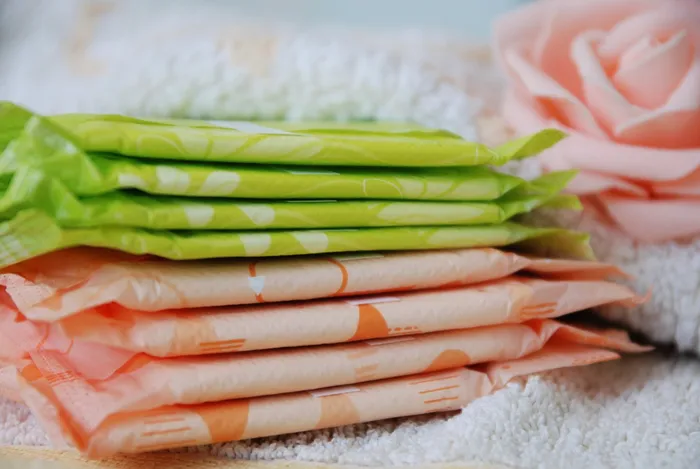
Research from the University of the Free State has detected hormone-disrupting chemicals insanitary pad and pantyliners in South Africa, raising serious health concerns for millions of menstruating individuals.
Image: Pixabay/ Grimnona
In light of the recent study conducted by the University of the Free State on chemicals found in sanitary pads and pantyliners, three respected organisations have come forward, urging the public not to panic.
The research team, comprising Janine Blignaut, Dr Gabre Kemp, Professor Elizabeth Erasmus, Professor Visser, and Professor Marietjie Schutte-Smith, analysed 16 sanitary pad brands and eight pantyliner types widely sold in South African retailers.
They tested for three groups of EDCs:
- Phthalates
- Bisphenols (including BPA)
-Parabens
The results found: bisphenols were detected in 100% of sanitary pads and 75% of pantyliners, while parabens were found in over 81% of pads. Phthalates, often used in plastics, were present in all pantyliners and 50% of pads tested.
Endocrine-disrupting chemicals are products that have the potential to interfere with the action of hormones, especially reproductive and thyroid hormones, when the quantities exceed permissible concentration levels.
A joint statement was released by the President of the South African Society of Reproductive Medicine and Gynaecological Endoscopy (SASREG), Dr Jack Biko, President of the College of Obstetrician and Gynaecologists (CMSA), and head of the Clinical Unit for Reproductive Endocrinology and Infertility from the University of Pretoria, Professor Zozo Nene, and President of the South African Society of Obstetrics and Gynaecology (SASOG), Professor Ismail Bhorat.
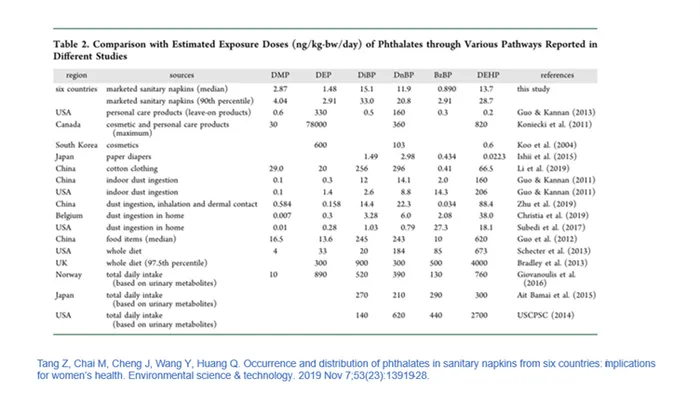
The table shows studies conducted in other countries.
Image: Supplied
“The recent public response, through social media and mainstream media, to a study by Blignaut et al published in Science of The Total Environment, Feb 20261 which was conducted at the University of the Free State on the finding of harmful endocrine disrupting chemical’s (EDC’s) on menstrual products requires context, perspective and correct interpretation of the data, with clear messaging on the broader implications for the public and for the country,” the statement read.
According to the joint-statement, endocrine-disrupting chemicals are products that have the potential to interfere with the action of hormones, especially reproductive and thyroid hormones, when the quantities exceed permissible concentration levels.
The permissible concentration levels are determined by the Cosmetic Ingredients Expert panel, and their decisions are used by the relevant regulatory bodies, such as the Food and Drug Administration in the US (FDA), to set practice guidelines.
“These endocrine disruptors are very common and are present in low concentrations in various foodstuffs, household products, personal care and beauty products such as toothpaste, shampoo and conditioners, body lotions, lipsticks, clothing, and electronics.
Thus, the finding that they are also found in menstrual products is not surprising,” the group said.
They said previous published studies have indeed confirmed that small amounts of these endocrine disruptors are present in menstrual health products.
A study in China2 reported that 40% of EDCs emanated from foodstuffs, 40% from other personal care products (PCPs), and 18% from indoor dust. Of the PCPs analysed, sanitary pads contributed only 6.8% of the total exposure through feminine PCPs.
“Thus, if we extrapolate approximately this data to the study under discussion, it is clear that perspective is required in interpreting the data, which should not be isolated to sanitary products, which appear to be a small contributor to the overall total EDC exposure.
Importantly, the study from the Free State did not establish causation between the presence of the endocrine disruptors in menstrual products and infertility, hormone dysfunction, or cancer,” the group said.
According to the organisations, there is no need for the public to panic.
“If the data is critically analysed in context, one concludes that, while it is important to note the existence of the endocrine disruptors in products used in our daily lives, there is no need to panic.
The implication for the general public of harm has not been proven in this study. The daily doses are low, and the cumulative health risk has not been studied. The evidence at present does not support a change of usual practice,” they said.
The organisations further stated it was their recommendation that the South African Regulatory authorities conduct further testing and studies to determine the safety of these products.
“It is noteworthy that the study did not recommend that any of the tested products be withdrawn from the market,” they said.
The organisations said it wants to reassure their patients and the public that the study conducted did not establish any causality between the use of menstrual products and infertility, cancer, or adverse health outcomes.
“Currently, we do not have evidence to recommend that patients stop using any menstrual health products, and we do not recommend any change of usual practice,” the organisations said.
robin.francke@iol.co.za
IOL