

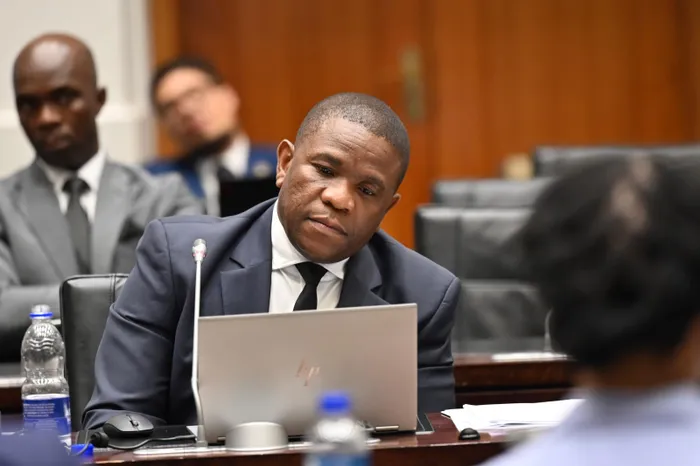
Parliament’s Ad Hoc Committee investigating allegations made by SAPS KwaZulu-Natal Police Commissioner, Lieutenant-General Nhlanhla Mkhwanazi, saw the return of the provincial commissioner to answer questions which have arisen during oral proceedings.
Image: Ayanda Ndamane/Independent Newspapers
The African National Congress’s Khusela Sangoni-Diko said that while the marathon process or oral hearings at Parliament’s Ad Hoc committee has come to an end, they will now have to deal with the issue of conflicting evidence.
Parliament’s Ad Hoc Committee investigating allegations made by SAPS KwaZulu-Natal Police Commissioner, Lieutenant-General Nhlanhla Mkhwanazi, saw the return of the provincial commissioner to answer questions which have arisen during oral proceedings.
Speaking on the sidelines of Wednesday’s proceedings, Sangoni-Diko said that Mkhwanazi arrived “determined to respond to every single thing that has ever been said against him, which is good”.
“I mean, he was the one who propagated and instigated these hearings to look into these allegations. It's good to see that he's been following the proceedings quite closely and stands ready, as always, to give responses to the issues,” she said.
“Today's the last day of what has been a marathon process. I think to date we've heard over 30 witnesses. I don't know how many thousands of documents of evidence that we've had to go through.
“All in all, the process has really been enlightening. I think it's done a lot to uncover a lot of what we believe is rot within the SAPS in particular,” Sangoni-Diko said.
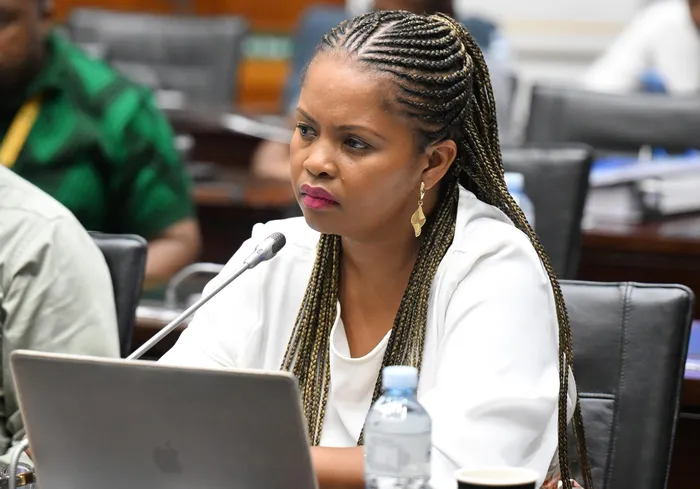
ANC's Khusela Sangoni-Diko.
Image: Phando Jikelo / Parliament RSA
“We're going to have to deal with the issue of conflicting evidence. We're going to have to deal with the issue of contrasting views on a number of issues. But I suppose that's the work that goes into the report now.
“What is most important for us is what we do with everything that we've heard? General Mkhwanazi, who is the last witness today, is obviously speaking a lot and seeking to push a particular reform agenda that we're going to have to craft across the criminal justice system,” Sangoni-Diko said.
“Just the tensions within SAPS, IPID, and IDAC are a problem. We wish would have been addressed more, including the judiciary as well as the National Prosecuting Authority (NPA).
“It doesn't stop here. I think a lot of the engagement is still to go into what the solutions are to begin to deal with these problems decisively, and rebuild the SAPS, criminal intelligence in particular, to serve the people and ensure that all citizens in South Africa are and do feel safe,” she said.
uMkhonto weSizwe Party’s (MK Party) Thulani Shongwe added that they have appreciated the opportunity of serving South Africans, and “we also appreciate the fact that Ubaba Mkhwanazi has been brave to come out with such explosive and dangerous effects”.
“As MPs ourselves, we are not immune to the danger of such information, but it takes strength and, should I say, ability to think through whether you go all in or you go half in or what, but for the creator of the country, the change that we need, we appreciate this opportunity.
“From here, we'll take it further from what we've heard and what we've seen,” Shongwe said.
“Obviously, from here we're going to do recommendations, and it might be a robust debate between political parties, where some are perceived to be protecting others and criminality, and so on.
“But I urge South Africans to watch this space very, very closely so that they can make decisions through their votes, which parties should serve them.
“If it's possible that we as parties can align together in one space, then we deserve to work together. But if we don't, then this is the time, South Africans will directly observe us, and determine whether we mean what we say and we do what we promise,” Shongwe said.
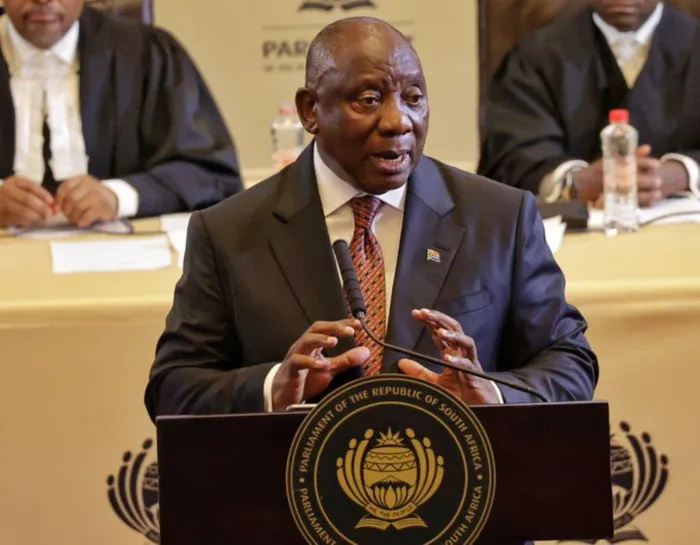
President Cyril Ramaphosa.
Image: GCIS
President Cyril Ramaphosa also formally submitted written responses to questions from Parliament’s Ad Hoc committee on Tuesday.
“President Cyril Ramaphosa has formally provided written responses to questions submitted by Parliament’s ad hoc committee investigating allegations regarding security matters raised by Lieutenant-General Nhlanhla Mkhwanazi,” said presidency spokesperson Vincent Magwenya.
“President Ramaphosa’s submission demonstrates his support for the parliamentary process and ensures the committee receives all necessary information to carry out its mandate effectively.
“The president is committed to transparency and welcomes parliamentary oversight of the executive, as part of the democratic processes that govern the country,” Magwenya added.
Sangoni-Diko corroborated that they've received the responses from the president, which also go into a number of pages.
“He had received about a hundred questions or so (from the committee) that he was meant to respond to. We are glad that they've come through, although they are a couple of days late. But I think given the number of things that he had to respond to, it's quite understandable on our side,” Sangoni-Diko said.
“We're looking forward to going through that, and we will be dealing with those responses, as part and parcel of drafting the report. There may be a to-and-fro again, where there are follow-up issues on what his responses are.”
theolin.tembo@inl.co.za