

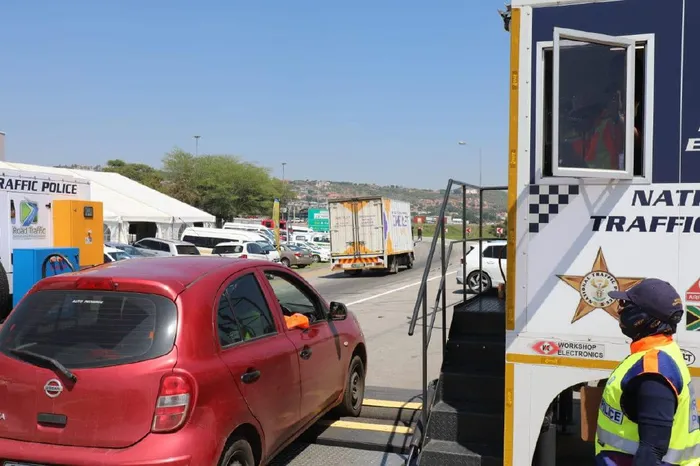
The RTMC is urging drivers to ensure that their vehicles are roadworthy before heading off on their Easter Holiday road trips.
Image: RTMC
Motorists in Gauteng are being warned to brace for stricter enforcement and heavy penalties ahead of the Easter travel rush, with authorities flagging a sharp rise in unroadworthy vehicles on South Africa’s roads.
The Road Traffic Management Corporation (RTMC) states that drivers may face fines of up to R4,000, along with vehicle impoundment, if they fail to ensure their cars are roadworthy before taking to the road.
The warning comes as new figures reveal a troubling national picture, with hundreds of thousands of vehicles deemed unfit for public roads.
“Motorists across Gauteng province are facing the possibility of incurring heavy fines of up to R4,000 if they fail to undertake frequent vehicle checks and maintenance,” RTMC spokesperson Simon Zwane said.
The agency stressed that this is critical “to prevent unnecessary breakdowns, especially during the Easter holiday rush”.
According to the RTMC, nearly 342,084 unroadworthy vehicles are currently in circulation across South Africa, with Gauteng accounting for more than half of that figure.
The province alone has 176,450 such vehicles, far ahead of KwaZulu-Natal with 40,878 and the Western Cape at 40,815.
The scale of the problem has raised concerns about road safety during peak travel periods, when traffic volumes increase significantly, and the risk of accidents rises.
Authorities say many of these vehicles pose a direct danger not only to their drivers, but to other road users.
Under Section 42(1) of the National Road Traffic Act, it is illegal to operate an unroadworthy vehicle on a public road.
The RTMC warned that enforcement will be stepped up, with offenders facing more than just fines.
“A fine of up to R4,000 can be issued and vehicles may be impounded. Offenders will further be liable for impoundment and storage costs,” Zwane said.
The agency indicated that roadside checks and compliance operations will intensify as the Easter period approaches, a time historically associated with increased road fatalities.
The RTMC also turned its focus to commercial and public transport operators, warning that lapses in maintenance could have far-reaching consequences.
“Commercial and public transport operators are reminded of the importance of carrying out regular maintenance to avoid dangerous incidents,” Zwane said.
Responsibility, it added, lies with both operators and drivers to ensure that vehicles are in proper working condition before undertaking trips on South African roads.
The law already imposes strict testing requirements. Buses must undergo roadworthy testing every six months, while taxis and heavy freight vehicles are required to be tested annually.
Despite this, authorities suggest compliance remains uneven, particularly during high-demand travel periods.
Compounding the problem is a surge in expired Professional Driving Permits (PrDPs), which are required for drivers of public and commercial vehicles.
The RTMC revealed that 338,649 PrDPs have expired nationwide. Once again, Gauteng leads with 108,788 expired permits, followed by the Western Cape with 47,480 and KwaZulu-Natal at 29,077. Mpumalanga recorded 27,808 expired permits.
The figures raise concerns about regulatory compliance in the transport sector, particularly as millions of South Africans rely on taxis, buses, and freight services during holiday travel.
Driving without a valid PrDP is a legal offence and can invalidate insurance claims in the event of an accident, further increasing financial and safety risks.
The Easter holidays are traditionally one of the busiest periods on South African roads, with long-distance travel, family gatherings, and increased economic activity driving traffic volumes to higher levels.
Authorities have repeatedly linked this period to spikes in road accidents, often citing factors such as speeding, fatigue, and vehicle condition.
The RTMC’s latest warning suggests that unroadworthy vehicles and non-compliant drivers remain a persistent threat.
The agency is urging motorists to take proactive steps before travelling, including checking brakes, tyres, lights, and engine condition.
karabo.ngoepe@inl.co.za