

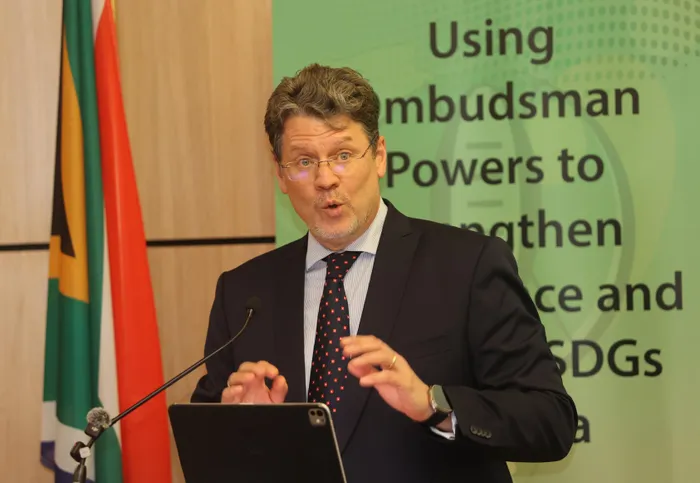
Deputy Minister Andries Nel addresses the importance of whistleblower protection in South Africa’s fight against corruption.
Image: Tumi Pakkies/ Independent Newspapers
Deputy Minister of Justice and Constitutional Development, Andries Nel, highlighted the need for enhanced whistleblower protection as part of South Africa’s broader anti-corruption strategy during the relaunch of the African Ombudsman Research Centre (AORC).
Nel said that ombudsman institutions in Africa serve as vital guardians of accountability, justice, and citizen empowerment.
“With the support of regional bodies such as the African Ombudsman Research Centre (AORC) and AOMA (African Ombudsmen and Mediators Association), these institutions are becoming increasingly resilient, visible, and sustainable, strengthening their ability to promote good governance across the continent,” Nel said.
“AORC has played a key role in building institutional capacity through knowledge-sharing, training, and collaboration.”
Nel said he was fortunate to attend AORC’s launch on March 15, 2011, during his first term as Deputy Minister of Justice and Constitutional Development.
“Its relaunch signals a renewed commitment to expanding its impact, enhancing professional development, and fostering stronger cooperation among Ombudsman and Public Protector offices,” Nel said.
“This positions Africa to take a leading role in governance reform.”
Nel highlighted the government’s commitment to strengthening existing legal frameworks to ensure the safety and support of whistleblowers, who are central to exposing maladministration and corruption within the public sector.
He said that South Africa’s Public Protector, in collaboration with other stakeholders, is central to establishing a robust constitutional framework to combat corruption and maladministration.
This is guided by the National Anti-Corruption Strategy (2020–2030), which promotes accountability, ethical governance, and improved service delivery. The strategy’s six pillars align with the Public Protector’s expanded objectives, which focus on protecting the public—especially vulnerable groups—from maladministration while fostering a culture of integrity within the public sector, he said.
“The fight against corruption is multi-faceted, combining institutional reform, legislative measures, and coordinated enforcement,” Nel said.
“A key area of focus is strengthening whistleblower protection. The National Anti-Corruption Advisory Council has recommended enhanced safety measures, increased public awareness, and stronger support systems for whistleblowers.”
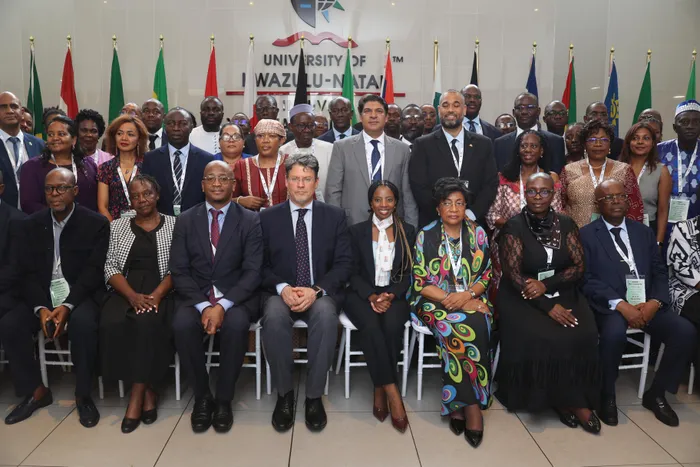
Delegates from several African countries attended the relaunch of the African Ombudsman Research Centre, which marks a renewed commitment to accountability and justice across Africa.
Image: Tumi Pakkies/ Independent Newspapers
Nel noted that legal frameworks such as the Protected Disclosures Act, the Witness Protection Act, and the Prevention and Combating of Corrupt Activities Act provide a foundation, but ongoing reforms aim to create a more comprehensive and effective protection system.
“The consolidation of the Anti-Corruption Task Team, which includes agencies such as the National Prosecuting Authority, Special Investigating Unit, Hawks, SARS, and the Financial Intelligence Centre, seeks to ensure better coordination, information sharing, and joint investigations, particularly in handling whistleblower reports,” Nel said.
“Chapter 9 institutions, including the Public Protector, play a critical role in promoting transparency, accountability, and good governance. Strengthening and supporting these institutions is essential to sustaining anti-corruption efforts and building public trust.”
Nel also highlighted that the ombudsman and Public Protector institutions are more than complaint-handling bodies. They are proactive institutions that safeguard human rights, promote accountability, enhance access to justice, fight corruption and strengthen the rule of law. Their role has expanded to include monitoring public administration, advising on policy reforms, and ensuring that governance structures remain fair and transparent.
“This evolution reflects the growing complexity of modern governance and the need for institutions that can adapt to new challenges such as corruption, inequality, and the erosion of public trust in government,” Nel said.
He also said that ombudsman, mediator, and Public Protector institutions play a crucial role in advancing Agenda 2063 and the United Nations’ Sustainable Development Goals, particularly SDG 16, which promotes peace, justice, and strong institutions.
“They strengthen governance by enhancing accountability, improving access to justice, and reinforcing the rule of law,” Nel said.
thobeka.ngema@inl.co.za