

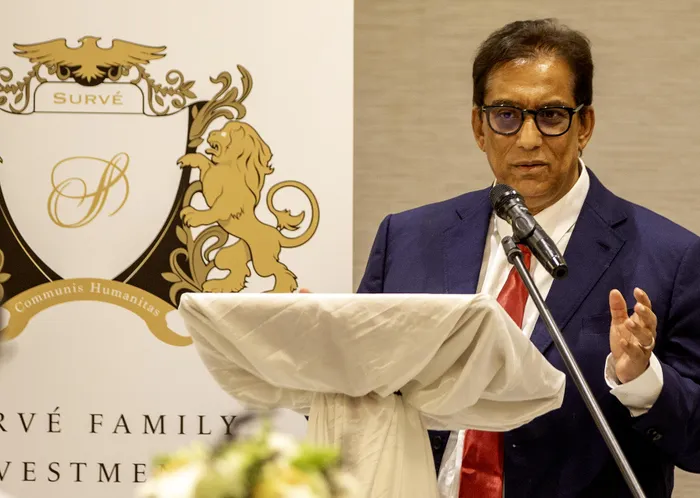
Dr Iqbal Survé on Tuesday launched his latest book, A Shared Future For Humanity, at the Radisson Blu in uMhlanga.
Image: Leon Lestrade / Independent Newspapers
Dr Iqbal Survé on Tuesday launched his latest book, A Shared Future For Humanity, at the Radisson Blu in uMhlanga. The publication traces the Survé family’s investments, philanthropic work, and global initiatives, while reflecting on partnerships that have supported its involvement in business, diplomacy, and nation-building.
The launch drew a range of guests from political and business circles, including former president Jacob Zuma and businessman Vivian Reddy, who were among those in attendance.
Survé stated that the book is not solely his journey; it represents the journey of many individuals who have accompanied him along this path.
“A book like this would not be fair if I didn’t personally, through the book, thank everybody who was part of that particular journey. So I wrote that chapter called Gratitude, which was gratitude to my teachers, my time at medical school, and how difficult it was. It was a white apartheid institution. There were only 12 of us under a class of 220 that were not white, becoming a doctor, serving in the Struggle, working with Madiba, working with others, but it was about all of them having really contributed towards the journey,” Survé said.
“And so, in a way, I also want to say thank you to our employees, some of whom have been with us for decades and left us, and others who are with us today. And it was. I think the best part of the book for me was saying thank you. The Gratitude section. I hope you like it as well.”
He mentioned choosing to conclude the book with a tribute to those who supported him. This included a visit to Robben Island and his mother.
He said the book is not an autobiography.
“This is really about the journey, and saying thank you,” Survé said.
He also said that we need to stop thinking about ourselves and start thinking about what we can do to make a difference, and the essence of the book is that we are all the same.
“We are all the same. Just a little difference in skin tone. Maybe some have more money than others. Maybe people speak different languages, different histories, different religions, cultures, if you want, but we are actually all the same. We all have ambitions. We all want to care about our families. We all want opportunities for our children, our community. We all want safety. We all want to feel that there’s life. Yet, there’s so much division. And so the book really is about that message. It’s the shared humanity, ‘communis humanitas’, which is the theme of the crest of the family, which is a shared humanity.”
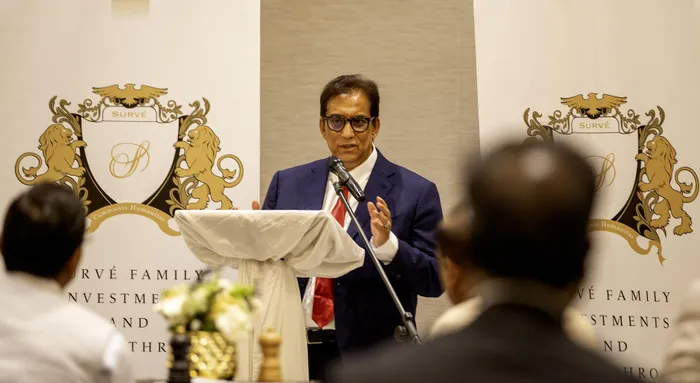
Dr Iqbal Survé said the book reflects a collective journey rather than a personal one, shaped by the many people who supported him along the way. He said it was important to acknowledge those contributions openly, which led to the inclusion of a chapter titled Gratitude.
Image: Leon Lestrade / Independent Newspapers
Zuma, speaking on Survé acquiring the newspaper business, said: “In a sense changed the manner of reporting in South Africa and began to tell the stories as they are supposed to be told.”
He told Survé he wanted to see him and see that he has “succeeded under very serious situations”.
Zuma said Survé succeeded in his battles and managed to write a book. He said he thought that by this time, he would have written several books, but it was impossible because he had been “fighting wars all the time”, he laughed.
“Thank you for doing this because it is always important to put yourself in the community, in the country where you were. You succeeded in doing what was very difficult to do.”
Reddy said: “This book is a legacy captured in words. A reflection of values lived, not merely spoken.”
He said what struck him immediately was its intention. It is carefully structured, not in chronological order but rather philosophically.
“It begins where all two legacies begin, with family, values, and origin. It moves through friendships, gratitude, and solidarity, particularly in South Africa. It then opens into Africa’s investment story before expanding outward to the global stage. And finally, it returns quite deliberately to service, recognition, and the future.”
Reddy said the book addresses deeply personal South African themes: resilience, migration, sacrifice, education as liberation, and entrepreneurship as responsibility, not entitlement.
thobeka.ngema@inl.co.za