

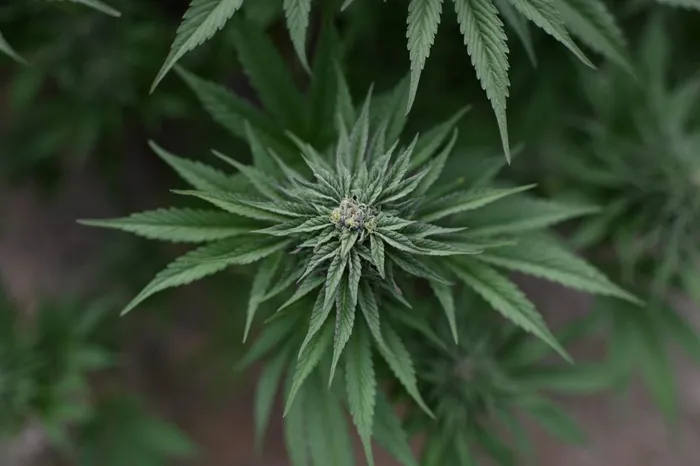
US President Donald Trump said on December 18, 2025 that he was signing an executive order reclassifying marijuana as a less dangerous drug, in one of America's biggest shifts in drug policy for years.
Image: Robyn Beck / AFP
US President Donald Trump signed an executive order on Thursday to reclassify marijuana as a less dangerous drug, paving the way for more medical research on the use of cannabis products.
The long-awaited move will take marijuana out of the most hazardous category of narcotics alongside heroin and LSD, although it does not legalise its use across the United States.
But Trump said that while it "no way sanctions its use as a recreational drug", it would make it better available for "legitimate medical uses" such as for people with cancer and chronic pain.
"We have people begging for me to do this. People that are in great pain," Trump said in the Oval Office.
"This reclassification order will make it far easier to conduct marijuana-related medical research, allowing us to study benefits, potential dangers and future treatments. It's going to have a tremendously positive impact."
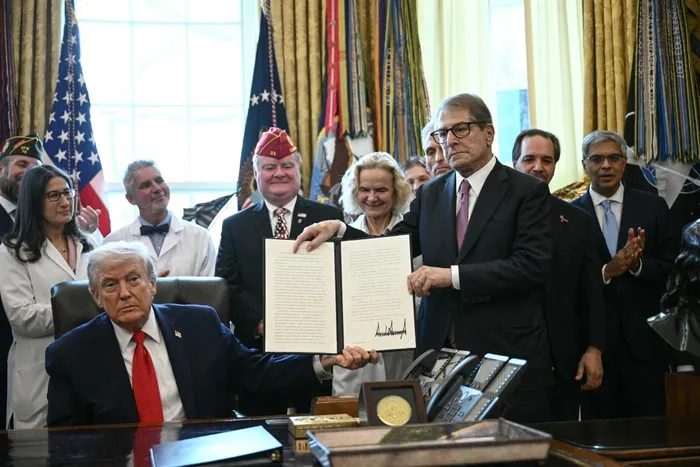
US President Donald Trump and Howard Kessler, founder of the Commonwealth Project, hold up an executive order easing restrictions on marijuana in the Oval Office at the White House in Washington, DC, on December 18, 2025.
Image: BRENDAN SMIALOWSKI / AFP
Marijuana is currently classified as a Schedule I substance, in the same league as drugs like heroin. The US government considers these drugs to have high abuse potential without accepted use for medical treatment.
Schedule III substances, which include ketamine and anabolic steroids, are considered to have medical value and less potential for abuse.
Dozens of US states already have legal medical marijuana programs, and many, including California, have also approved its recreational use.
But Trump's move is aimed at lowering barriers to research, as authorising clinical studies on Schedule I substances can require many layers of approval.
It could also be a major tax boost for companies that legally grow and sell cannabis.
A senior US official told reporters it was a "common-sense decision."
Trump, who was surrounded by white-coated medical experts for Thursday's announcement, added that the order "is not the legalisation" of marijuana.
The teetotal 79-year-old added: "I've always told my children, don't take drugs, no drinking, no smoking, and just stay away from drugs."
Cannabis companies were trading higher on the New York Stock Exchange after the announcement, although they were already up this week in anticipation of the news.
As of 1910 GMT, Aurora Cannabis was up 8.62 per cent, Canopy Growth was up 10.94 per cent, and Tilray was up 6.40 per cent. Canopy Growth's share price has jumped nearly 90 per cent in just one week.
US presidents cannot unilaterally reclassify a drug, but Republican Trump's order directs Attorney General Pam Bondi to expedite the process.
Democrat Joe Biden's administration had previously pursued reclassification, but efforts stalled and were not completed before Trump took office in early 2025.
The US has a patchwork of state-level regulations regarding the commercial distribution, recreational possession and personal cultivation of cannabis.
In small amounts, it is already legal for recreational use in 24 states, as well as the capital, Washington.
AFP