

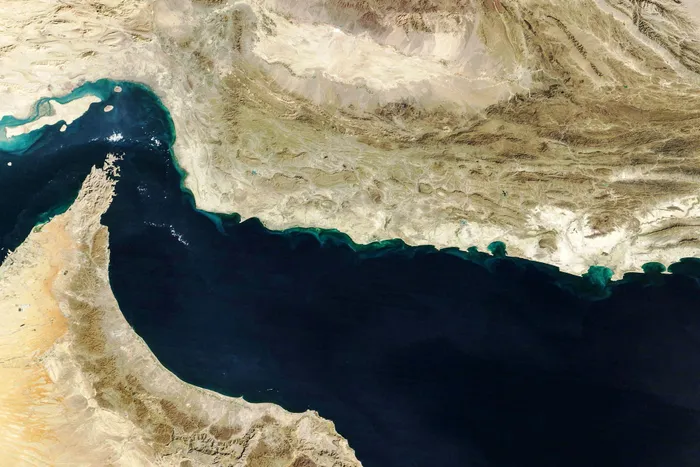
20% of global oil depends on this one narrow waterway.
Image: NASA Earth Observatory / AFP
The Strait of Hormuz, a critical oil chokepoint through which a fifth of global shipments pass, has been effectively shut by the war in the Middle East, with Iran targeting vessels and threatening shipping after it was attacked by the US and Israel in late February.
Iran is now said to be considering a plan to allow oil tanker access through the Strait for shipments that are traded in Chinese yuan, although the proposal has not been formally confirmed or formalised into policy.
According to Daily Sabah, Iranian authorities have floated the idea of allowing limited tanker traffic on the condition that oil transactions are conducted in yuan. This would appear to align with Tehran’s broader efforts to reduce reliance on the US dollar.
Analysts suggest the move may be intended as leverage amid heightened geopolitical tensions and ongoing sanctions pressure.
Recent developments on the ground indicate that Iran’s approach remains fluid. Iran’s foreign minister has said that vessels from most countries — excluding the United States and Israel — could still transit the strait, according to New York Post.
Meanwhile, a Pakistan-bound oil tanker successfully passed through the waterway following coordination with Iranian authorities, Reuters reported, implying that access is still being managed on a case-by-case basis.
Analysts say the yuan proposal fits into a broader trend of Iran deepening energy ties with China and exploring alternatives to dollar-based trade. However, any attempt to enforce such a policy widely would still have significant implications for global oil markets and shipping routes.
Oil prices have surged above the $100 per barrel in the past week, on fears of future oil supply, given the disruptions at the Strait.
Oil prices resumed their push higher on Tuesday as several countries pushed back against Donald Trump's demand that they help secure the key Strait of Hormuz, while Iran continued to target crude-producing neighbours, AFP reported.
The advances pared some of the previous day's sharp losses that came after the head of the International Energy Agency (IEA) said more stockpiles could be tapped if needed.
Trump has called for allies in Europe and elsewhere to help reopen the Strait of Hormuz, which Iran has effectively closed, saying at the weekend that securing the waterway "should have always been a team effort, and now it will be".
But on Monday, there was only a lukewarm response, with German Chancellor Friedrich Merz saying the war started by US-Israeli strikes on Iran was "not a matter for NATO", while Britain, Spain, Poland, Greece and Sweden all distanced themselves from the calls.
IOL News