

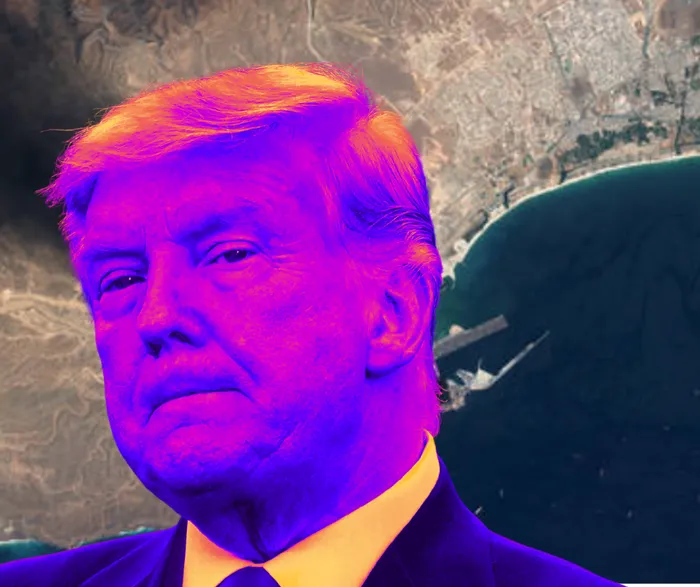
Trump pauses Iran strikes as Hormuz tensions shake markets.
Image: IOL Graphics
US President Donald Trump has retreated from his threat to bomb Iran’s power plants, signalling a shift in tone more than three weeks after Washington and Israel launched strikes on the Islamic Republic.
The announcement follows 24 days of rising tension that disrupted global energy markets and pushed the region closer to wider conflict.
In a post on Truth Social, on Monday Trump said the United States would delay planned strikes on Iranian power infrastructure for five days after what he described as “very good and productive conversations” between the two sides.
He said he had instructed the US Department of War to postpone “any and all military strikes against Iranian power plants and energy infrastructure” while talks continue.
The move marks a clear retreat from a 48-hour ultimatum issued only days earlier.
Over the weekend, Trump warned Tehran that Washington would begin destroying major Iranian power stations unless shipping resumed through the Strait of Hormuz within two days.
Iran has kept the strategic waterway largely closed since February 28, when US and Israeli forces carried out their initial strikes. The closure has affected oil flows and contributed to sharp increases in global energy prices.
“If Iran doesn’t FULLY OPEN, WITHOUT THREAT, the Strait of Hormuz within 48 HOURS … the United States of America will hit and obliterate their various power plants,” Trump wrote at the time.
European efforts to help reopen the strait had failed before the ultimatum was issued.
Strikes on energy infrastructure would have risked wider regional fallout and further shocks to global supply.
Trump’s decision not to strike Iran’s energy facilities come as the Iranian authorities warned they could respond sharply to any attack on their coastline or islands.
According to AFP, Iran’s defence council said access routes across the Persian Gulf could be mined if further military action takes place.
The council operates under the country’s Supreme National Security Council and was formed after Iran’s 12-day war with Israel in June last year.
The warning underlined the risks facing shipping lanes already under pressure since late February.
Trump’s decision to delay strikes suggests the White House is now weighing negotiations after its threat to hit Iranian infrastructure failed to reopen the Strait of Hormuz within the deadline it set.
IOL News