

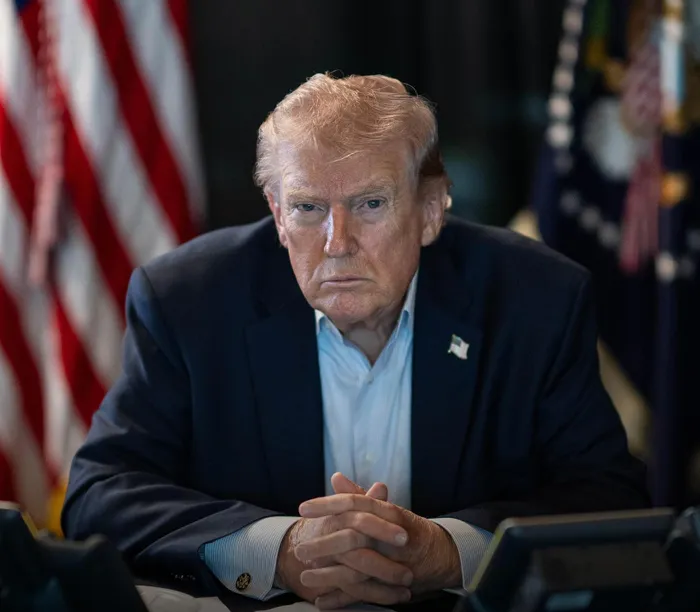
President Donald Trump said Friday that US warships are being reloaded with weaponry to strike Iran if talks in Pakistan fail to produce a deal
Image: Facebook/White House
The United States and Iran are holding their highest-level talks in years in Islamabad in a Pakistan-brokered bid to turn a fragile two-week ceasefire into a lasting end to a war that has roiled global energy markets. Read more.
President Donald Trump said Friday that US warships are being reloaded with weaponry to strike Iran if talks in Pakistan fail to produce a deal, in an interview with the New York Post.
"We have a reset going. We're loading up the ships with the best ammunition, the best weapons ever made -- even better than what we did previously and we blew them apart," the Post quoted Trump as saying.
"And if we don’t have a deal, we will be using them, and we will be using them very effectively."
In a brief and cryptic message on his Truth Social network earlier, Trump had spoken of the "WORLD’S MOST POWERFUL RESET!!!"
Vice President JD Vance headed to Islamabad on Friday to lead the US delegation in this weekend's talks with Iran, with a warning to Tehran not to "play" Washington.
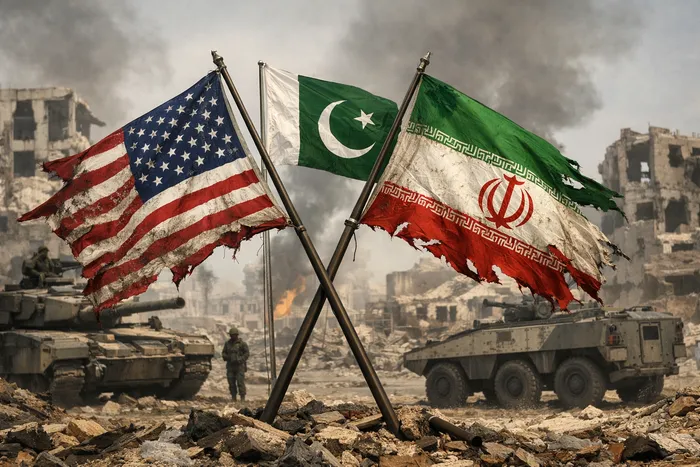
The Pakistan is set to host talks between the United States and Iran following a ceasefire agreement.
Image: Sora
Stocks rose on Friday with investors still optimistic about the shaky ceasefire in the US-Iran war ahead of planned weekend talks. However, oil prices extended gains over worries that Israel's continued attacks on Lebanon could shatter the peace process.
Washington and Tehran's announcement Tuesday of a two-week truce that would see the Strait of Hormuz reopened, having been closed since the start of the war, sparked a wave of euphoria across markets.
But hopes for an end to the crisis have been hit by squabbles between the two sides over the agreement and the future of the key waterway, through which a fifth of the world's oil and gas passes.
US and Iranian delegations are due in Pakistan for peace talks, but they come as Tehran says Israel has already broken terms of the ceasefire by continuing to hit Lebanese targets, where Israel says Iran-backed Hezbollah is located.
The United States and Israel deny an end to attacks on Lebanon was in the deal.
Meanwhile, Trump warned on Thursday against Iran's plan to charge a toll for ships passing through Hormuz, saying on social media : "They better not be and, if they are, they better stop now!"
In a second message just a few minutes later, he added that "very quickly, you'll see Oil start flowing, with or without the help of Iran."
He also said Tehran was "doing a very poor job, dishonorable some would say, of allowing Oil to go through the Strait of Hormuz".
Just 10 vessels have passed through the waterway since the Middle East war ceasefire took effect, according to maritime tracking data.
Only one of those tankers is not Iranian.
Equity markets, which have been hammered since the war broke out on February 28, extended the week's gains, while oil prices climbed around one percent but sat just below $100 a barrel. West Texas Intermediate briefly jumped above the key level on Thursday.
Analysts said the equity gains were helped by news that Israel and Lebanon will hold talks next week in Washington.
That comes after NBC reported that Trump had asked Israeli Prime Minister Benjamin Netanyahu for a scale-back in strikes on its northern neighbour to ensure the success of negotiations with Iran.
With stocks rising, IG market analyst Fabien Yip said those "that suffered the deepest drawdowns during the conflict are likely candidates for the sharpest near-term recovery".
But she warned: "The ceasefire is temporary and the details remain sparse. Iran's 10-point proposal and Washington's stated positions retain substantial differences, and the Islamabad talks carry no guarantee of success.
"Even the reopening of the Strait of Hormuz — subject to Iran's 'technical limitations' — will take weeks, if not months, before shipping backlogs are cleared and supply chains normalise.
"Crude oil prices are therefore unlikely to revert to pre-war levels in the near term."
Investors are also keeping tabs on the release later Friday of US inflation data, which observers say could provide an idea about the impact of the surge in crude on consumers.
Air raid alerts sounded across Israel, including in the commercial hub of Tel Aviv and the southern coastal city of Ashdod, after rocket fire from Lebanon.
There were no immediate reports of casualties, but Israeli media reported that air-defence systems had intercepted at least one incoming rocket.
Earlier Friday, Hezbollah said it had launched three waves of rocket and drone strikes against Israeli soldiers on both sides of the border as well as a town in northern Israel.
Iran's new supreme leader, Mojtaba Khamenei, said in his latest written message that the Islamic republic did not want war with the United States and Israel but would protect its rights as a nation, state television reported.
"We will not renounce our legitimate rights under any circumstances, and in this respect, we consider the entire resistance front as a whole," he added, in an apparent reference to Lebanon, where Israel is fighting with Tehran's ally Hezbollah.
Khamenei has still not been seen in public since being appointed to succeed his father, who was killed in the initial wave of strikes on February 28.
Israel's military warned residents of Beirut's southern suburbs, long a stronghold of Lebanese militant group Hezbollah, of imminent strikes and called for them to evacuate.
The World Health Organization urged Israel to cancel the evacuation order, saying the district it intends to target is home to two hospitals.
The announcement came a day after Israel carried out its largest wave of strikes since the start of its war with Hezbollah on March 2, killing more than 300 people and wounding over 1,000, according to Lebanon's health ministry.
British Prime Minister Keir Starmer and Trump called "for a practical plan" to get shipping moving again through the Strait of Hormuz following the US-Iran ceasefire, the UK leader's office said.
The two leaders "agreed that now there is a ceasefire in place and agreement to open the Strait, we are at the next stage of finding a resolution," according to Downing Street.
"The leaders discussed the need for a practical plan to get shipping moving again as quickly as possible," and agreed to speak again.
Israel and Lebanon will hold talks next week in Washington after Prime Minister Benjamin Netanyahu ordered direct talks, a US official said Thursday.
The negotiations will come soon after the United States and Iran are set to open talks in Pakistan.
Israel has said that the Lebanon invasion, in which it is targeting Iranian-backed Hezbollah, is not affected by a two-week ceasefire between the United States and Iran.
But a Hezbollah lawmaker reiterated his group's rejection of any direct negotiations between Lebanon and Israel.
Earlier, Netanyahu said Israel would keep hitting Hezbollah "wherever necessary".
"We are continuing to strike Hezbollah with force, precision, and determination," the prime minister said on his personal X account.
Thousands of Iranians rallied in a tribute to former supreme leader Ali Khamenei, killed on the first day of the war.
Holding portraits of their deceased leader and waving the Islamic republic's flag, Khamenei supporters took part in rallies across the country after he died in the US-Israeli attack on February 28.
AFP