

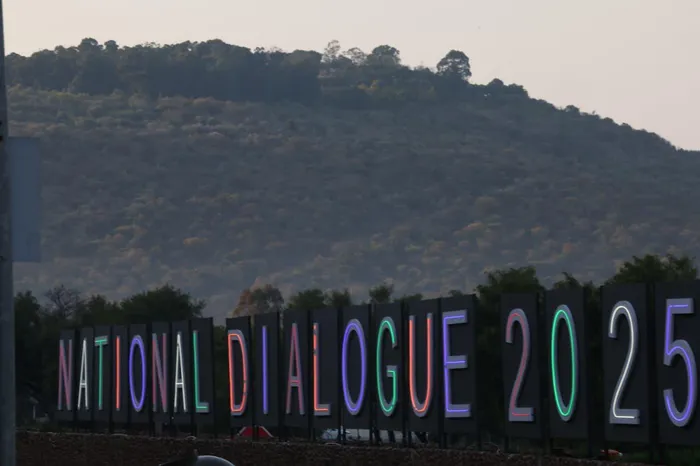
The National Dialogue should go beyond cosmetic conversations and desist pacifying a growingly disenchanted society, says the writer.
Image: Supplied
The much-anticipated National Convention Dialogue has now concluded. Billed as a turning point for national unity and reform, the event drew participation from political leaders, civil society, traditional authorities, youth representatives, and members of the diplomatic corps.
Over two days, delegates engaged in themed panels, breakout sessions, and plenary discussions, addressing a wide range of national concerns including governance, social cohesion, economic recovery, and constitutional reform. But as the dust settles and the banners come down, the lingering question is: what was actually achieved?
Despite the impressive stagecraft and inclusive optics, the event fell into a familiar pattern—ambitious in rhetoric, yet hollow in substance. In short, the National Convention Dialogue functioned more as a ceremonial talk shop than a platform for decisive action. There is no doubt that national dialogue is essential, particularly in times of rising political tension, social fragmentation, and economic uncertainty. Done well, such forums can bridge divides, restore trust in institutions, and generate actionable consensus. However, the just-concluded convention revealed an uncomfortable truth: we have become far too accustomed to mistaking conversation for change.
Much of the content presented during the convention had been said before. Issues such as electoral reform, youth unemployment, judicial independence, and decentralisation have been discussed repeatedly in parliament, in civil society reports, and at previous summits. Yet, these longstanding concerns continue to be met with cyclical engagement—energised dialogue followed by institutional silence. The format of the weekend’s gathering further limited its potential impact. Although a wide range of voices were present in the room, including some grassroots actors, the structure did not lend itself to deep or disruptive reflection. Panels were time-constrained, recommendations were largely general, and there was no binding mechanism to commit participants—particularly policymakers—to implementing any outcomes.
One could argue that the event served more as a public relations exercise than a nation-building initiative. For many in the political class, it provided a rare opportunity to signal goodwill and reformist intent without necessarily making binding commitments. For others, it was an opportunity to regain public legitimacy ahead of the next electoral cycle. While symbolic gestures have their place in politics, they cannot substitute for effective governance. Citizens are weary of national events that promise transformation but deliver only communiqués and final reports destined for bureaucratic archives. The convention may have captured headlines, but it did little to capture the urgency of ordinary people’s lives—those facing unemployment, displacement, failing public services, and eroding trust in the system.
Perhaps most concerning is the absence of a clear follow-up mechanism. There is, as yet, no detailed roadmap on how the resolutions from the dialogue will be translated into law or policy. Who will be responsible for implementation? What timelines have been set? What institutions will be accountable for progress? Without these crucial elements, the dialogue risks becoming just another well-documented but poorly remembered event. This does not mean that all hope is lost. If the conveners of the dialogue are serious about impact, they must act swiftly to institutionalise the process. This includes publishing a comprehensive implementation plan, establishing an independent oversight body to track progress, and integrating citizen feedback into all stages of the reform process. Dialogue must not be treated as a one-off event, but as a continuous, structured part of governance.
Ultimately, national renewal necessitates more than speeches, photo opportunities, and hashtags. It requires political will, institutional discipline, and above all, respect for the voices of citizens whose lives depend on real reform. Until then, events like the National Convention Dialogue will remain expensive exercises in symbolism—well-staged, well-attended, but fundamentally ineffectual. The time for talk has passed. The country now waits for action.
*Mayalo is an independent writer. The views expressed are not necessarily those of IOL or Independent Media