
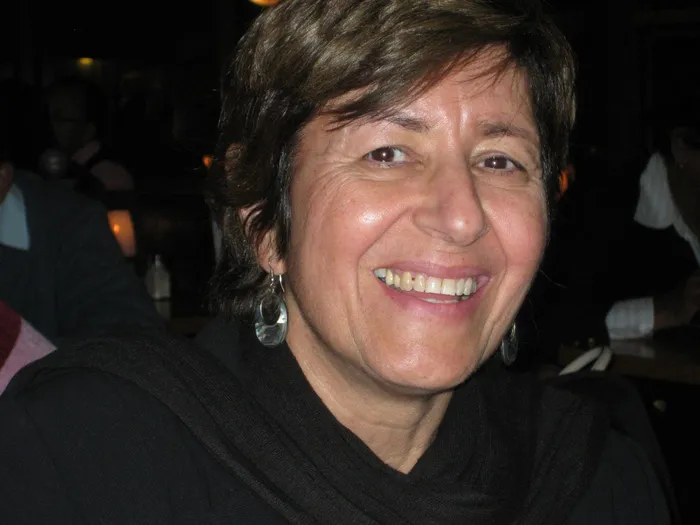
Embedding equity and justice into global development efforts can transform societies and ensure prosperity for all, says the writer.
Image: SUPPLIED
Global development endeavours must aim at bringing prosperity and well-being to every member of the human family. Such endeavours should not be reduced to economic growth alone. They must be animated by universal values such as equity and justice, trustworthiness, and cooperation and collaboration. And there is a need for just institutions, at local, national, and international levels.
According to a statement of the Bahá'í International Community: “Equity is fairness, the standard by which each person and group is able to maximize the development of their latent capacities. …Equity is the standard by which policy and resource commitment decisions should be made. Justice is the vehicle through which equity is applied, its practical expression in the life of the individual and society. It is only through the exercise of true justice that trust will be established among the diverse peoples, cultures and institutions of an increasingly interdependent world”.
The current concept of development – based mainly on a materialistic approach – has not been able to achieve its ultimate aims. Neither has it been capable of leading humanity to the tranquillity and prosperity which it deserves. While searching for alternative approaches, development practitioners are increasingly realizing that new efforts will only succeed when spiritual values and their enforcement are made an essential part in the development process.
The Bahá'í International Community says, “… the spiritual dimension of human nature can be understood, in practical terms, as the source of qualities that transcend narrow self-interest. Such qualities include love, compassion, forbearance, trustworthiness, courage, humility, co-operation and willingness to sacrifice for the common good – qualities of an enlightened citizenry, able to construct a unified world civilization”.
It is a requirement of justice that all members of the community are included in development efforts – whether men or women and from whatever background they may be . And it is vital to have cooperation at all levels to eliminate human suffering, and to ensure that every individual meets his or her basic human needs.
The Bahá'í International Community states, “successful development efforts require, above all, a spirit of cooperation and collaboration among the participants in the development process. …The required higher level of cooperation can only be motivated by a sincere appreciation for the unity of all human beings. Only on such a basis can prejudices related to nation, race, religion, sex, and other prejudices that hinder determined and equitable development activities be eradicated”, and that “cooperation between countries is essential in eradicating the gross inequalities among nations that continue to destabilize the world”.
To be just requires that poverty should be eradicated globally. Poverty is a condition that arises from the injustices in society, including racism, xenophobia, and discrimination against women. We see at one extreme deprivation and despair afflicting vast numbers of the world’s population, whilst at the other extreme very few have the privilege of abundant wealth. In the Bahá’í view, to create a just and peaceful global society, the extremes of both wealth and poverty must be eliminated.
Furthermore, socio-economic development must begin at the grassroots – a bottom-up approach – involving everyone in the process of building a satisfactory quality of life. It must involve those suffering because of inadequate food, water, sanitation, housing, etc., in both decision-making and action. Through dialogue at grassroots levels the experiences and aspirations of the people can be incorporated in shaping action.
For feedback please contact: secretary.nsa@bahai.org.za or (011) 801 3100
Websites: www.bahai.org, www.bahai.org.za