

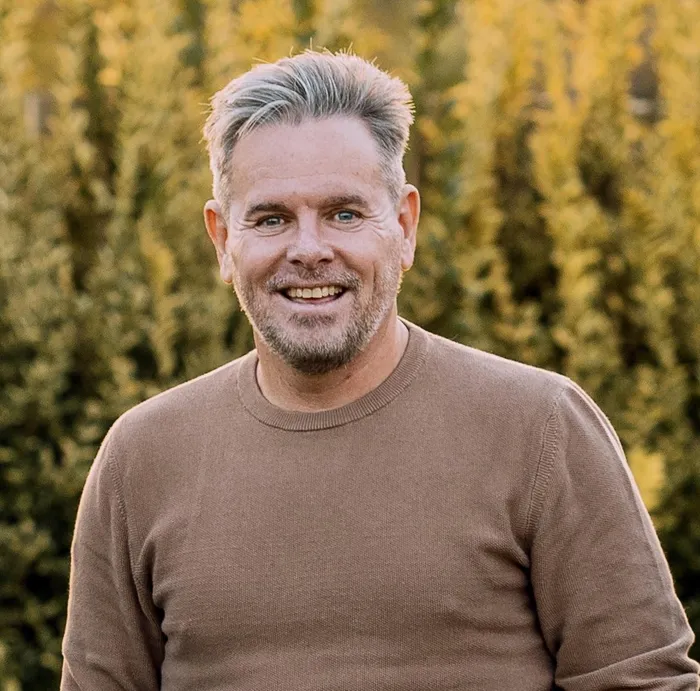
Bert Pretorius, senior pastor at 3C Church and President of the South African Community of Faith-based Fraternals and Federations (SACOFF), says their goal "is not to resist oversight, but to ensure that it is done in a way that strengthens — not silences —the voice of faith in our nation".
Image: SUPPLIED
Right now in South Africa, two very important freedoms are under serious threat. The first is freedom of religion — your constitutional right to believe what you believe and practise your faith without interference. The second is the right of religious communities to gather, lead themselves, and run their own affairs according to their convictions.
These aren’t minor privileges granted by the state — they’re protected constitutional rights. And while there are real concerns about abuse in some religious spaces that absolutely need to be addressed, many are worried that government intervention could go too far — shifting from protecting people to prescribing belief, and from ensuring accountability to exercising control.
This last week, we sat down with Members of Parliament (well, over Zoom), including leaders from the faith community, to talk it through. And for once, in this long saga stretching over many years, it felt like we were being heard.
At the centre of this debacle is the CRL Commission. In simple terms, it's a government body established to protect the rights of people from different cultures, religions, and languages in South Africa. A few years back, Parliament asked them to look into problems in some churches, like financial abuse or even harmful practices that cross into abuse. To tackle this, the CRL established a special group, the Section 22 Committee. The idea was to develop ways for the church sector to police itself more effectively, such as codes of conduct and mechanisms for reporting wrongdoing.
But here's where it got tricky. Many church leaders, including SACOFF (the South African Community of Faith-Based Fraternals and Federations), felt this committee wasn't truly listening to them. Leaders were left out of important meetings, their ideas ignored, and the whole thing started to feel like the government was trying to take over religion instead of just helping fix the problems.
SACOFF represents a huge slice of South Africa's faith scene—239 organisations and around 21,000 churches, from big, established ones to smaller, independent ones. Pastor Jan Pretorius, who represented them at the meeting, put it like this: "We've given detailed suggestions for how to make things better without the state regulation of religion. These proposals were practical, legally grounded, and sector-informed.” Thus, ideas come from the ground, from people who actually run churches.
Things got even more heated recently when Professor Musa K. Xulu, who was chairing that Section 22 Committee, stepped down. In public statements, he echoed what many faith leaders had been saying: the process felt rigged, exclusive, and more about control than genuine accountability. He called the environment "toxic" and said there seemed to be a predetermined push for state oversight.
This isn't about picking on one person or one commission. It's about making sure the system works fairly for everyone.
That's why the meeting with the Portfolio Committee on COGTA (Cooperative Governance and Traditional Affairs) was so important. The chairperson, Dr Zweli Mkhize, set a really good tone. He reminded everyone that South Africa's Constitution is crystal clear:
• Section 15 protects your right to believe what you want and practise your faith freely; and
• Section 31 says religious communities have the right to get together and run their own affairs.
These aren't favours from the government — they're bedrock rights, just like the right to free speech or a fair trial. At the same time, Dr Mkhize was firm: No one is saying abuse should be ignored. If someone breaks the law — stealing, assaulting, manipulating people — they should face justice through the police and courts, just like anyone else.
The committee didn't rush to judgement. They promised to:
• Check if the Section 22 Committee is even allowed under the Constitution;
• Look at the codes of conduct that churches themselves have suggested. • See how existing laws can deal with real crimes; and
• Dig into the concerns about how the CRL has been handling things.
In other words, they're doing their homework instead of jumping to conclusions. And they made it clear: Parliament is the right place for these tough conversations, not some backroom process.
SACOFF isn't against fixing problems. In fact, they're leading the way. More and more independent churches have been joining umbrella groups voluntarily, showing they want accountability — but on their own terms, through their own networks, designing mechanisms that strengthen accountability without undermining religious freedom. While recognising the importance of the role the CRL plays, it shouldn't be turned into a religious police force pursuing ‘spiritual crimes.’
SACOFF commits to the following:
1. Shared commitment to safe and accountable faith communities;
2. Recognition of the CRL’s constitutional role;
3. Support for genuine self-governance, not state oversight;
4. Existing laws are sufficient if properly enforced;
5. Legislated “self-regulation” equates to state control;
6. Voluntary Religious Freedom Charter and Code already exist; and
7. Ongoing commitment to dialogue and protection of religious freedom.
South Africa is one of the most spiritually diverse countries on earth. Millions of people — Christians, Muslims, Jews, traditional believers, and more — rely on their faith for comfort, guidance, and community. When things go wrong in a church (and sadly, they sometimes do), it hurts everyone. But if the solution is to clamp down on religion itself, it could chill the very freedoms that make our democracy special.
The good news from last week's meeting? It felt like a step towards partnership instead of a fight. Parliament didn't pick sides. They heard the faith leaders out. And they committed to doing the deep work needed to get this right. As I said after the meeting: "South Africa's democracy shines brightest when we tackle hard issues through real conversation — whether it's in a fancy parliamentary room or on a laptop screen."
The road ahead won't be easy. But if everyone stays at the table, with the Constitution as the map, there's real hope we can build a system that protects the vulnerable and preserves the precious freedom to worship. That's not just good for churches — it's good for all of South Africa. God bless, indeed.
• Pastor Bert Pretorius, President of the South African Community of Faith-Based Fraternals and Federations.