

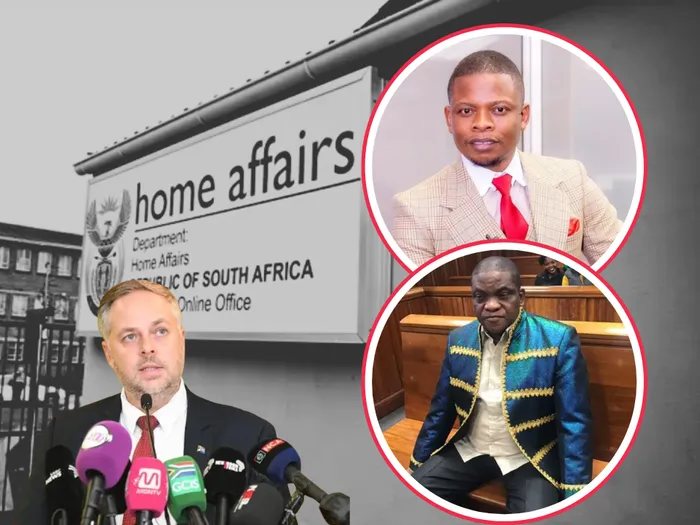
Shepherd Bushiri (top) and Nigerian televangelist Timothy Omotoso (bottom right) are implicated in a shocking investigation by the SIU, revealing systemic corruption within South Africa's Department of Home Affairs headed by Minister Leon Schreiber. Should this lead to increased regulation of churches? The writer explores the implications of government failures on religious freedom.
Image: IOL Archives/IOL Graphics
South Africans have every reason to be outraged by what the Special Investigating Unit uncovered at Home Affairs. The report details serious corruption permits allegedly being sold for cash, officials working alongside criminal networks, systems manipulated for personal gain, and border controls compromised. This is not an administrative oversight or minor mismanagement. It is a profound breach of public trust that further erodes confidence in government institutions.
Yet within hours of the SIU report’s release, the CRL Rights Commission suggested that this situation proves churches must now be formally registered and regulated by law. That conclusion does not follow the facts. The SIU investigation exposed corruption within a government department. It revealed failures of internal controls, accountability gaps, and abuse of public office. These are governance failures within Home Affairs — not evidence that churches lack oversight or that faith communities require increased state control. As faith leaders, we do not defend corruption. We do not minimise wrongdoing. We do not excuse criminality, whether in government or in religious settings. However, we must ask an honest question: How does corruption within Home Affairs suddenly become an argument for regulating churches?
The Church must not be made a scapegoat for failures of governance or corruption within state institutions. When government systems break down, accountability rests with those entrusted to manage and safeguard them — not with faith communities. The corruption uncovered at Home Affairs calls for reform, transparency, and real consequences. It does not justify shifting blame onto the Church or expanding state control over religious freedom.
Let us be clear: if an individual who calls himself a pastor commits fraud, sexual abuse, trafficking, or financial crime, the criminal justice system must deal with it. Religious freedom has never been a shield against prosecution. South Africa already has a robust legal framework to address wrongdoing, including fraud statutes, immigration laws, anti-corruption provisions, financial regulation, labour law, child-protection legislation,and criminal codes. These laws apply equally to everyone.
The presence of criminals does not mean churches need to be licensed. It means criminals must be prosecuted. When a police officer takes a bribe, we do not increase regulation of citizens. We hold the officer accountable. When a Home Affairs official abuses power, we reform the department. We do not control faith communities in response.
The proposal to treat pastors like doctors or lawyers misunderstands what religion is. A doctor must meet defined scientific standards before performing surgery. A lawyer must be admitted to practice before appearing in court. These professions operate within state-created legal monopolies. Faith does not. A religious calling is not conferred by the State. It is recognised by a community of belief. It may be shaped by doctrine, tradition, spiritual experience, or conviction. It may look very different from one community to another. That diversity is not disorder. It is the very definition of religious freedom, and it is protected by the Constitution.
If the State begins to determine who qualifies as a legitimate religious leader, religious freedom becomes conditional. It becomes subject to administrative approval. It becomes a matter of permission, and once belief requires permission, it is no longer free. Then we no longer have any meaningful right to religious freedom. That outcome is unacceptable and deeply unconstitutional.
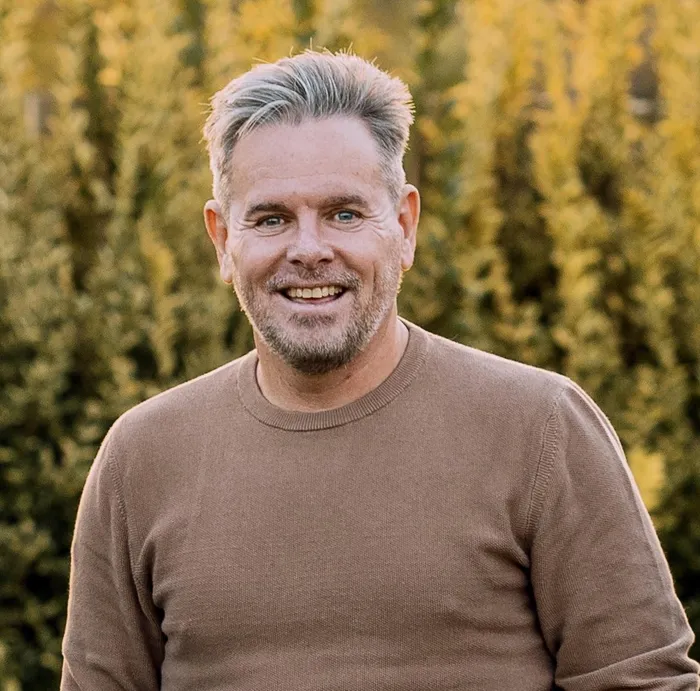
South Africans are outraged by corruption uncovered at Home Affairs, but should this lead to increased regulation of churches? Pastor Bert Pretorius, senior pastor at 3C Church and President of the South African Community of Faith-based Fraternals and Federations (SACOFF), says the Church must not be made a scapegoat for government failures or corruption.
Image: SUPPLIED
The narrative that the religious sector operates without accountability is inaccurate and unfair. Across South Africa, churches, mosques, temples and synagogues operate within structured governance systems. Denominations have councils, synods, assemblies and disciplinary processes. Independent churches operate within fraternals and networks. Umbrella bodies bring leaders together for oversight and collaboration. SACOFF itself represents hundreds of member bodies and thousands of faith-based organisations. Within these networks, ethical standards, peer accountability and cooperation are everyday realities.
In addition, religious organisations comply with tax regulations, labour law, municipal requirements, and national legislation. Many are formally registered entities subject to reporting and governance standards. The suggestion that religion exists outside the law is simply incorrect.
The appropriate response to the SIU findings is to strengthen Home Affairs, improve internal controls, vet officials properly, tighten verification systems, and restore administrative integrity. Preventing the corruption described in the SIU report within the Department of Home Affairs will not be fixed by registering pastors. Bribery is not cured by theology exams. Administrative corruption is not fixed by licensing clergy. Syndicates within a department are not dismantled by creating a religious council. We must be careful not to use one institutional failure to justify expanding state authority into another sphere.
It is also important to note that the CRL already has the power to engage with religious communities, facilitate communication, conduct research, and make recommendations. If the goal is improved dialogue, compliance awareness, or collaboration, these objectives can be pursued within existing legal frameworks. Expanding towards a legislated system of state control over religion is neither necessary nor constitutionally sound.
South Africa’s Constitution protects freedom of religion not as a favour from the State but as a fundamental right. The State must prosecute crime. It must reform its departments when they fail or fall short. It must ensure integrity in public administration. But it must emphatically not decide who is authorised to preach, pastor, or prophesy. While corruption in Home Affairs is a serious national concern demanding serious reform, it does not justify controlling the Church.
As faith leaders, we will continue to support accountability, ethical leadership and lawful conduct. We will also defend the constitutional boundary that protects religious freedom for all. The solution to corruption in government is better government, not state control of faith.
*Pastor Bert Pretorius is President of the South African Community of Faith-Based Fraternals and Federations (SACOFF). The views expressed do not necessarily reflect the views of IOL or Independent Media.