

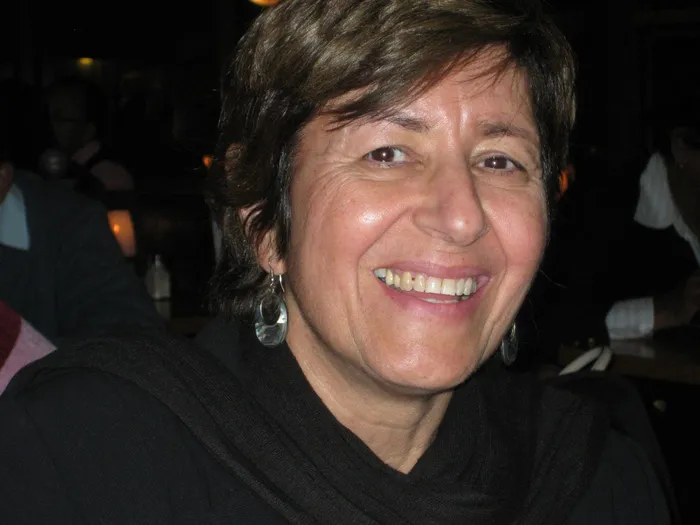
On International Women’s Day, the writer reflects on the strides made in girls' education and the persistent challenges that hinder their progress.
Image: SUPPLIED
International Women’s Day on 8th March is an opportune time to reflect on the progress made towards the education, empowerment and equal opportunities for girls, while looking ahead to overcoming the challenges that remain.
Despite visible improvements in the last few decades to ensure equal education and other rights for the girl-child, various forms of discrimination against them still persist. According to the UNESCO Institute of statistics, 133 million girls are out of school. 56% of illiterate youth are girls. Women still account for almost two-thirds of all adults unable to read.
The education and empowerment of women and girls and their attaining their rightful status in society, in the Bahá’í view, is vital to the well-being of humanity. It is at the same time an essential aspect of a broader principle: the oneness of humanity. In the context of the oneness of the human family, gender equality is not only a requirement of justice, but it is a pre-requisite for peace and prosperity.
“Fundamental to the Bahá'í world-view is the concept of the oneness and wholeness of the human race, of which the equality of men and women is a vital and clearly stated spiritual and social principle, conducive to personal integration and social cohesion”.
There are no acceptable grounds, biological, social, or moral, to justify denying women and girls equality with men and boys, and it is obvious that the denial of such equality is an injustice against one half of the world's population.
“Divine Justice demands that the rights of both sexes should be equally respected since neither is superior to the other in the eyes of Heaven. Dignity before God depends, not on sex, but on purity and luminosity of heart”, say the Bahá’í Writings.
As girls and boys are equal in intellectual capacity and in their potential to serve humanity, girls and boys should study the same curriculum. The way should be open for girls to enter all spheres of human endeavour, including the arts and sciences, agriculture, commerce, industry and the affairs of state. There is no natural limit on women and girls' abilities.
Girls must be educated intellectually, spiritually, and emotionally. A child needs a nurturing environment and wise guidance particularly in the first years of life in order to develop sound character and a well-trained mind.
The Bahá’í Writings state that, "If the mother is educated then her children will be well taught. When the mother is wise, then will the children be led into the path of wisdom. If the mother be religious she will show her children how they should love God. If the mother is moral she guides her little ones into the ways of uprightness”.
Girls will not only render service to humanity as mothers and first educators of the next generation, but, as women, they will make special contributions to the creation of a just world order.
According to the Universal House of Justice, the international governing council of the Bahá’í Faith, “… the equality of men and women is …a universal spiritual truth about an aspect of the nature of human beings... It is, above all, a requirement of justice. This principle is consonant with the highest rectitude of conduct, its application strengthens family life, and it is essential to the regeneration and progress of any nation, the peace of the world, and the advancement of civilization”.
For feedback please contact: secretary.nsa@bahai.org.za or (011) 801 3100
Websites: www.bahai.org, www.bahai.org.za