

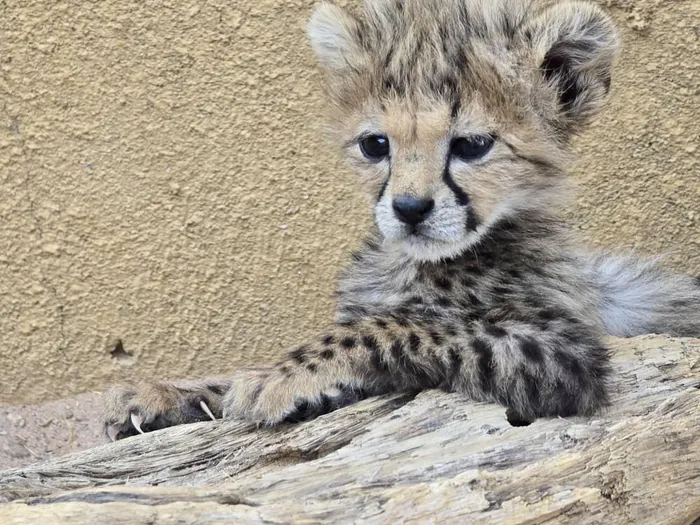
One of the cubs in Somaliland where Dr Laurie Marker opened a second centre in 2016 to care for cheetahs rescued from the illegal wildlife pet trade. The centre now has about 125 cheetahs.
Image: SUPPLIED
When the first cheetahs set foot in India after more than 70 years of extinction, the moment was historic. For those of us in Namibia, it carried a deeper meaning. These first cheetahs reintroduced to India came from Namibia, where much of the world’s remaining population still survives. A few months later a few more came from South Africa.
Conservation often works this way, across borders, over decades, with one effort shaping the next.
By the 1980s, cheetahs in South Africa were disappearing fast, pushed off land by expanding farms and growing conflict with livestock owners. At a critical point, Namibia’s cheetahs became a source population. Animals were moved south, helping rebuild populations that had been in decline.
Now, as cheetahs move from southern Africa to India, that earlier work is coming full circle in a way few could have predicted. Even with those gains, the species remains under constant pressure. Fewer than 7,000 cheetahs are left in the wild, a steep decline from more than 100,000 a century ago. Over 90 percent of their range is gone. What remains is fragmented, contested, and increasingly difficult to manage. In many places, cheetahs survive only where people allow them to. And sadly, cheetahs are not alone. As I write this from CMS COP15, global leaders are confronting a broader crisis: 24 percent of all migratory species are now threatened with extinction. These trends underscore a simple truth: conservation can no longer afford to be cautious or reactive.
That reality shapes everything about India’s reintroduction effort. The goal is to return a species to landscapes where it once played a critical role in maintaining an arid grassland ecosystem while navigating a far more crowded and complicated modern environment.
With more than 1.4 billion people, India brings a different set of challenges. Land is heavily used, protected areas are limited, and coexistence with wildlife requires constant negotiation. Long-term success depends on people as much as it does on habitat.
In South Africa, cheetahs are actively moved between these areas in a meta-population plan to maintain genetic diversity and keep populations stable. India is now working within a similar model. Cheetahs released into places like Kuno National Park are closely tracked, with their movements, hunting patterns, and adaptation monitored in real time. Decisions are made as conditions change, whether that means medical care, relocation, or adjustments in management.
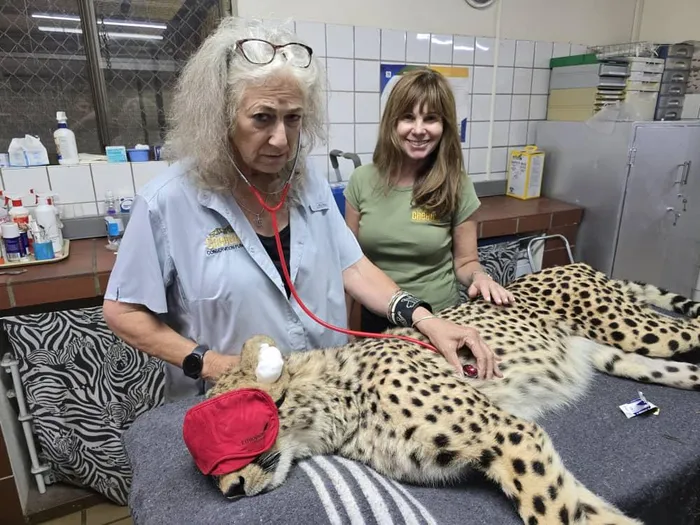
Dr. Laurie Marker (left) has spent the past 35 years leading the global effort to save cheetahs from extinction. She played a key role in their return to India, as well as in similar programmes currently being explored around the world.
Image: SUPPLIED
Debate around the project has been expected. Questions about ecological fit, long-term cost, and the use of African cheetahs have all been raised. Those concerns reflect how complicated conservation is, especially at this scale. But focusing only on the risks misses what’s already happening on the ground.
In many parts of the world, wildlife is disappearing faster than it can recover on its own. Waiting for perfect conditions is no longer realistic. Efforts like this move forward in real time, with imperfect information and constant adjustment. Standing still is often the greater risk.
Early signs from India are encouraging. Cheetahs are hunting, establishing territories, and reproducing. These are early steps, but they show restoration can work, even in landscapes shaped heavily by people.
Projects like this are often treated as exceptional but they’re becoming necessary. As habitats shrink and populations fragment, conservation increasingly means moving species, rebuilding populations, and managing them over time.
Across southern Africa, conservation has held where local communities see value in wildlife. Partnerships with landowners, community-based programmes, and economic incentives have helped stabilise populations. Where those relationships break down, so does conservation. India now faces that same test. Ecotourism, employment, and long-term engagement will determine whether cheetahs become part of the landscape again, or remain a short-lived effort.
For me, this work is both professional and personal. I’ve spent my life working to conserve cheetahs, and I’ve seen how quickly they can disappear, and how quickly they can recover when people choose to support them. Namibia helped rebuild South Africa’s cheetah population. Now it’s helping bring cheetahs back to India. That kind of long arc is how conservation actually works.
The reintroduction of cheetahs to India isn’t a guaranteed success. No conservation effort is. But doing nothing would guarantee failure.
Building a self-sustaining population will take time. There will be setbacks, adjustments, and lessons along the way. If the effort succeeds, it will reflect a shared commitment across continents and communities; one that, in many ways, began in Namibia.
* Dr Laurie Marker is the Founder & Executive Director of the Cheetah Conservation Fund. For more information about the CCF visit the website: www.Cheetah.org
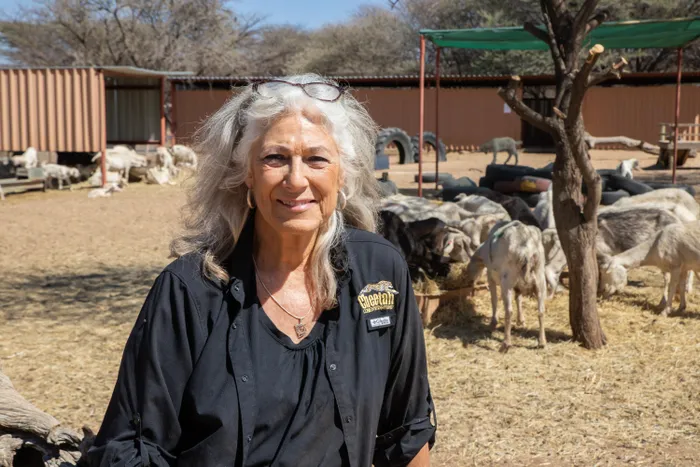
Dr Laurie Marker, Founder & Executive Director of the Cheetah Conservation Fund.
Image: SUPPLIED