

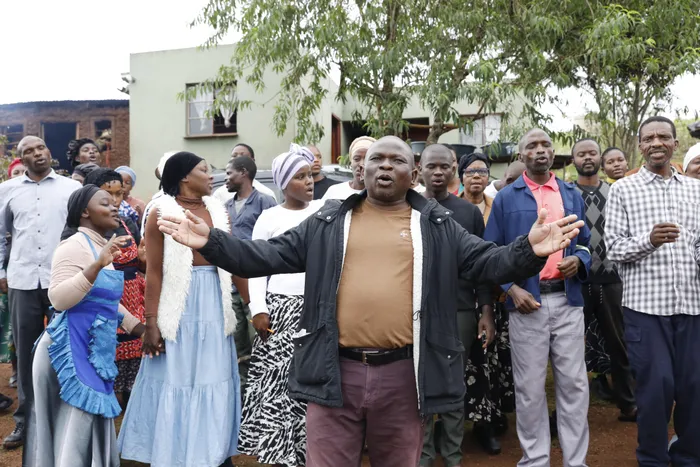
The chairperson of the Culture, Religion and Linguistic Rights Commission, Thoko Mkhwanazi-Xaluva issued warnings about the KwaMaphumulo-based religious sect known as Ikhaya Labafundi, whose members abandoned work, studies and their families to focus on faith-based farm-living led by Reverend Vusumuzi Sibiya (black jacket). The writer argues that the State has a right and a duty to intervene but warns against more religious regulations in South Africa.
Image: DOCTOR NGCOBO Indepedent Newspapers
The reports emerging from the iKhaya Labafundi community in KwaZulu-Natal are deeply troubling. Where children are denied education, where vulnerable people may be placed at risk, and where harmful health advice is allegedly given, the State not only has the right to act, but a duty to do so.
That is why what has happened in recent days matters so much.
The Chair of the CRL Rights Commission, Ms Thoko Mkwanazi-Xaluva, was quick to enter this matter publicly. She raised concerns about children being kept out of school and the serious dangers of encouraging HIV-positive members to stop taking antiretroviral treatment. In doing so, she was right to highlight the risks involved. The CRL exists, in part, to monitor and raise concerns where rights may be threatened and vulnerable people may be at risk.
No responsible faith leader should object to intervention where harm is evident. We all share a duty to protect children, preserve human dignity, and ensure that the vulnerable are not exploited in the name of religion.
However, if this case was meant to demonstrate why South Africa needs more legislation to regulate religion, it has in fact shown the opposite. It has demonstrated, in real time, that our constitutional and legal framework is already capable of responding when wrongdoing occurs.
The CRL raised concerns. The relevant authorities were alerted. The KwaZulu-Natal Department of Social Development, supported by health officials and other organs of State, stepped in using powers they already possess under existing law. Children were removed from a situation where their welfare was at stake. Public health concerns were treated seriously. Authorities acted within the framework of the law.
That is exactly how a constitutional democracy should function.
This case does not prove that South Africa needs new laws to regulate religion. It proves that South Africa already has the legal tools it needs to protect children, uphold education, safeguard public health, and hold wrongdoers accountable. The Children’s Act, the South African Schools Act, public health laws, criminal law, and social development mechanisms already exist. In this matter, they have been used to practical effect.
When institutions do their jobs properly, the law works.
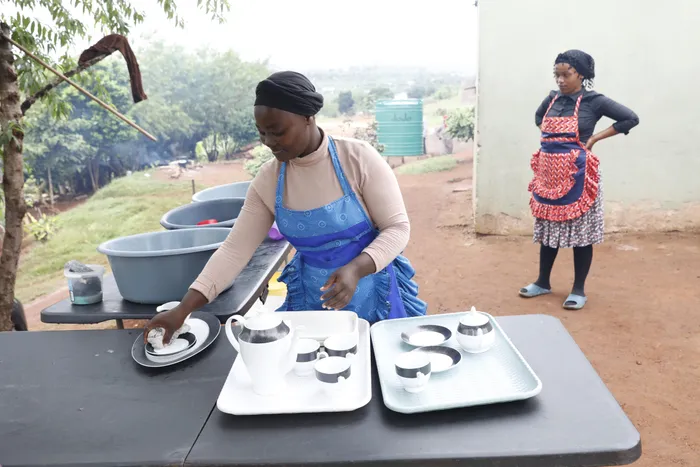
Noluthando Mbotho, from Harding in southern KwaZulu-Natal, left her job at Woolworths and a steady income to join about 100 members living a faith-based, self-sufficient lifestyle in the rural village of Dabangu in KwaMaphumulo. The Durban University of Technology marketing graduate says she has no regrets about her decision, as daily life in the community centres on worship and subsistence living.
Image: DOCTOR NGCOBO Independent Newspapers
What should concern every South African, regardless of faith, is the attempt to use this case as a springboard for a broader regulatory agenda.
In speaking about the iKhaya Labafundi matter, the CRL Chair again indicated her view that South Africa needs an Act of Parliament to establish a statutory council to deal with so-called “ethical issues” in the religious sector. This goes far beyond the legitimate enforcement of existing laws. Even more concerning was the suggestion that such a council, made up of one’s “peers”, would effectively help determine where a person’s freedom of religion “begins and ends”.
That is a deeply troubling proposition.
In South Africa, fundamental rights are not granted by councils, committees, or majorities. They are protected by the Constitution. Religious freedom does not depend on the approval of the State, nor on whether others agree with how one chooses to worship, live, or believe. It exists precisely to protect conscience, conviction, and religious expression, especially where these differ from prevailing opinion or from those in power.
The State has every right to act against abuse, illegality, neglect, coercion, and harm. But it has no mandate to sit in judgment over belief itself, nor to empower others to determine the acceptable boundaries of faith. That is a line South Africa must never cross.
At the same time, we must not lose sight of another important constitutional principle: adults in a free society are entitled to make choices about how they live, even where others may regard those choices as unusual, strict, or unconventional.
There is nothing inherently unlawful about adults choosing communal living, simplicity, sacrifice, or a faith-centred way of life. Across history, many religious traditions have embraced forms of shared life and separation from materialism. That, in itself, is not a threat to society. A society that protects only mainstream ways of living is not truly free.
But freedom has limits where harm is present.
The line is crossed when children are denied their rights, when coercion replaces consent, when people are abused or exploited, or when laws designed to protect life, dignity, education, and health are violated. Religious freedom has never meant freedom to break the law, neglect children, or endanger the vulnerable.
The Constitution protects belief. It does not protect abuse.
Our existing legal framework is already capable of distinguishing between lawful religious expression and unlawful conduct, between adult choice and child vulnerability, and between spiritual conviction and harmful neglect.
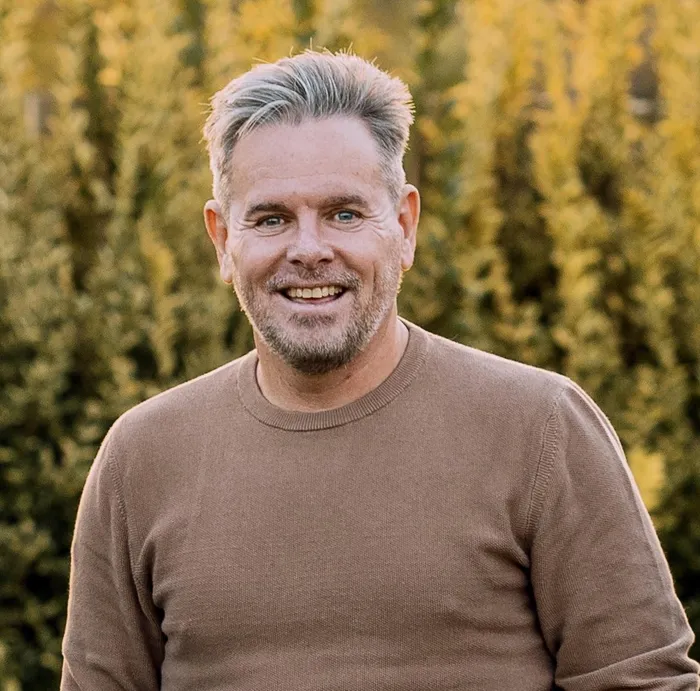
Bert Pretorius, senior pastor at 3C Church and President of the South African Community of Faith-based Fraternals and Federations (SACOFF), argues that the State has a right and a duty to intervene when wrongdoing involving the religious communities occurs, but warns against more religious regulations.
Image: SUPPLIED
South Africa has faced these questions before. Parliament was right in 2018 when it did not support the CRL’s proposed Peer Review Mechanisms, which would have opened the door to a system of State-controlled religion under the language of accountability.
The better path remains the one many faith leaders have consistently supported: enforce existing laws properly, protect the vulnerable effectively, strengthen education and awareness, and encourage voluntary accountability within faith communities. That approach is practical, constitutional, and proportionate. It protects both dignity and freedom.
This is not a choice between accountability and liberty. A healthy constitutional democracy must protect both.
As SACOFF, we want to reiterate our firm commitment to the following principles:
This case has not exposed a gap in the law. It has exposed something more important: when institutions do their jobs properly, the law already works.
The answer to harm is not more control over religion. The answer is wise law, properly enforced, and constitutional freedoms, carefully protected. That is how we protect both people and liberty.
*Pastor Bert Pretorius is President of the South African Community of Faith-Based Fraternals and Federations (SACOFF). The views expressed do not necessarily reflect the views of IOL or Independent Media.