

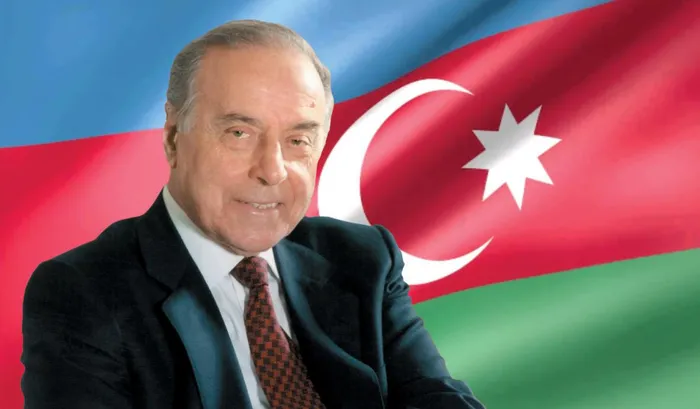
The founder and architect of the independent Azerbaijani state, and world-famous politician, Heydar Aliyev, became "eternal" in Azerbaijani modern history, providing unprecedented services to the homeland and people in all spheres of leadership of Azerbaijan.
Image: SUPPLIED
Every year on 10 May, the people of the Republic of Azerbaijan, as well as compatriots living across the globe, commemorate with deep respect the memory of National Leader Heydar Aliyev. On this occasion, many people visit his grave at the Alley of Honors in Baku to pay tribute to the Great Leader.
The founder and architect of the modern Azerbaijani state, a world-renowned political figure deeply devoted to his homeland and people, Heydar Aliyev occupies a distinguished place in the contemporary history of Azerbaijan. Throughout all periods of his leadership, he rendered exceptional services to the nation, laying the foundations of statehood and shaping the strategic course of national development.
Heydar Alirza oglu Aliyev was born on 10 May 1923 in the city of Nakhchivan. He led Azerbaijan during two important periods of its history: from 1969 to 1982, when Azerbaijan was part of the Soviet Union, and later from 1993 to 2003, after the restoration of independence. During the first period of his leadership, as a result of consistent social, economic and cultural reforms, Azerbaijan became one of the most developed republics of the USSR. In the second period, a new chapter was opened in the country’s history. Guided by the conviction that only a strong state can ensure the protection of citizens’ rights and freedoms, he took decisive steps towards the establishment of a democratic, legal and secular state based on national and universal values.
During the early years of independence, Azerbaijan faced serious political, economic and military challenges. Under Heydar Aliyev’s leadership, the country overcame the crisis of the 1990s and laid a solid foundation for sustainable development and stability. On 3 October 1993, Heydar Aliyev was elected President of the Republic of Azerbaijan with broad public support. In a relatively short period, he restored stability in the country and created the fundamental conditions for future progress.
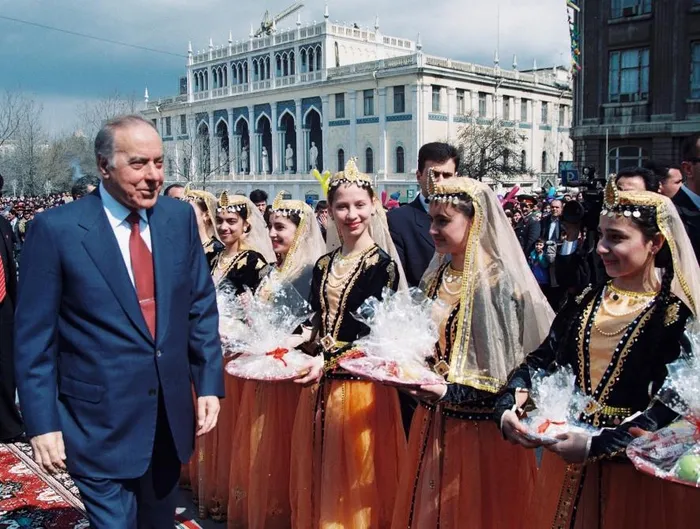
The National Leader actively supported initiatives to preserve and promote Azerbaijani culture, history and languge, thereby emphasizing the importance of national ideology and ensuring that future generations would understand and value their national identity.
Image: SUPPLIED
One of the key priorities of the National Leader was economic recovery and reform. Drawing on his extensive state governance experience, Heydar Aliyev initiated comprehensive economic reforms and promoted mutually beneficial partnerships with leading international actors. His strategic vision contributed to strengthening Azerbaijan’s position in the international system.
A major milestone in the country’s development was the signing of the “Contract of the Century” on 20 September 1994, which marked the successful implementation of Azerbaijan’s energy strategy. During this period, particular importance was also attached to strengthening the Armed Forces, reinforcing national unity and ensuring the restoration of territorial integrity. Under the leadership of Heydar Aliyev, the Constitution of the Republic of Azerbaijan was adopted by referendum in November 1995, laying the legal foundation for democratic governance, protection of human rights and implementation of large-scale economic reforms. During this period, Azerbaijan achieved macroeconomic stability, reduced unemployment, strengthened its financial system and launched strategic infrastructure projects, including the Baku-Tbilisi-Ceyhan oil pipeline.
Recognizing education as a key factor of national progress, Heydar Aliyev supported initiatives aimed at preserving and promoting Azerbaijani culture, language and historical heritage, thereby strengthening national identity. The formation of state policy in the field of sports is also closely associated with his name, as he laid the foundations for Azerbaijan’s development as an internationally recognized sporting nation.
Established on 10 May 2004, the Heydar Aliyev Foundation continues to promote the National Leader’s ideals. Under the leadership of the First Lady of the Republic of Azerbaijan, Mehriban Aliyeva, the Foundation has implemented numerous projects contributing to social, cultural and humanitarian development, further strengthening Azerbaijan’s positive international image.
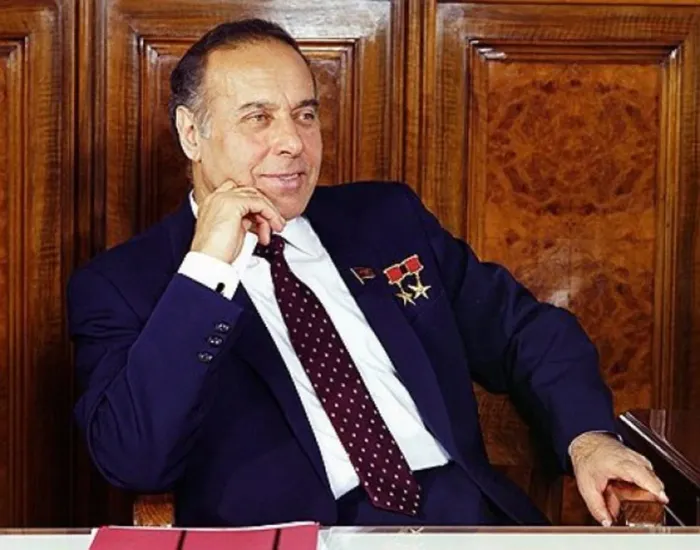
Heydar Aliyev was a true legend of his time and history remembers him as a unique and powerful head of the state who played a pivotal role to build the Republic of Azerbaijan as a powerful welfare state.
Image: SUPPLIED
Heydar Aliyev passed away on 12 December 2003 and was laid to rest at the Alley of Honors in Baku. His memory continues to be deeply cherished by the Azerbaijani people.
One of the key priorities of Heydar Aliyev’s state policy was the restoration of the country’s territorial integrity. As a continuation of the political course established by the National Leader, the President of the Republic of Azerbaijan, His Excellency Mr. Ilham Aliyev, ensured the restoration of Azerbaijan’s territorial integrity by ending the nearly 30-year occupation. Under the leadership of the Victorious Commander-in-Chief, the Armed Forces of Azerbaijan achieved success in the 44-day Patriotic War, resulting in the liberation of the territories of Garabagh and Eastern Zangezur.
Under President Ilham Aliyev’s leadership, Azerbaijan has become one of the dynamically developing countries of the region, actively contributing to international peace, stability and multilateral cooperation. Through sustained investment in human capital and economic modernization, Azerbaijan has achieved significant progress in poverty reduction, social welfare and economic growth. Strategic energy and transport initiatives have strengthened Azerbaijan’s role as an important connectivity hub between East and West and enhanced its contribution to global energy security.
Azerbaijan has successfully implemented major transnational projects, including the Trans-Caspian East-West Transport Corridor, the Trans-Anatolian Natural Gas Pipeline (TANAP) and the Trans Adriatic Pipeline (TAP), which have significantly contributed to strengthening regional cooperation and energy security. Azerbaijan has also demonstrated global leadership through its chairmanship of the Non-Aligned Movement and by hosting COP29, reaffirming its commitment to climate action and multilateral dialogue. One of the key outcomes of COP29 was the achievement of consensus on the New Collective Quantified Goal on Climate Finance, under which developed countries committed to mobilizing at least USD 300 billion annually for climate action until 2035.

Azerbaijan may be better known globally for hosting the Formula 1 Grand Prix on the streets of Baku City, but the country plays host to many other world events and conferences. This month, the country hosts 13th session of the World Urban Forum, which further reflects Azerbaijan’s strong institutional capacity and experience in successfully organising major international events.
Image: SUPPLIED
Just as Azerbaijan successfully hosted COP29 in December 2024, facilitating meaningful dialogue and landmark climate decisions, it is well-positioned to ensure the success of the 13th World Urban Forum (WUF13), which the country will host on May 17–22, 2026, under the theme “Housing for All: Safe and Sustainable Cities and Settlements.” The decision to hold the Forum in Azerbaijan, including the first-ever Summit of Heads of State and Government within WUF, signals growing international confidence in the country’s leadership on sustainable development and urban transformation. Hosting WUF13 reflects Azerbaijan’s strong institutional capacity and experience in successfully organizing major international events.
On 28 May 2026, the Azerbaijani people will commemorate the 108th anniversary of the establishment of the Azerbaijan Democratic Republic. Founded on 28 May 1918, the Azerbaijan Democratic Republic became the first parliamentary republic in the Muslim East and one of the first democratic and secular states in the region. The Declaration of Independence laid the foundation for a sovereign state based on democratic principles, human rights and the rule of law. Despite its short existence, the Azerbaijan Democratic Republic established key state institutions and introduced progressive reforms, including granting women the right to vote, which was a remarkable achievement for its time.
On the occasion of the 103rd anniversary of the birth of National Leader Heydar Aliyev, it is important to once again underline his exceptional role in shaping modern Azerbaijani statehood. The political legacy of Heydar Aliyev continues to serve as a solid foundation for the sustainable development of Azerbaijan and the strengthening of national unity.
The memory of Heydar Aliyev lives on in the hearts of the Azerbaijani people, and his enduring legacy continues to guide the country’s future development.
** The views expressed do not necessarily reflect the views of Pretoria News, IOL or Independent Media.