

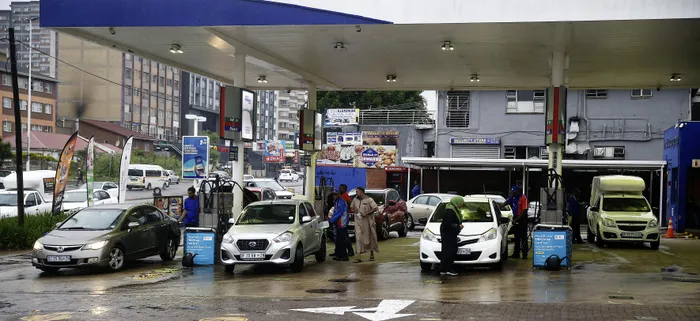
PAIN: Nog 'n petrol hike
Image: Leon Lestrade/Independent Media
PETROL prices are set to hit an all-time high next month, as South Africans koes for more pain at the pump.
The latest daily snapshot from the Central Energy Fund has the experts predicting that 95 unleaded petrol could cost R27.42 at the coast, surpassing the previous July 2022 high of R26.90.
Inland residents can expect to pay R28.13.
On a more positive note, a significant over-recovery has developed for diesel, with data pointing to decreases of between R3.84 for 50ppm and R4.27 for 500ppm.
In fact, the latest daily numbers show that the diesel relief could swell further between now and the end of this month if conditions remain favourable.
Another interesting development, which could bring relief in the longer term, is that South Africa’s Minister of Mineral and Petroleum Resources, Gwede Mantashe, is pushing for the establishment of a new state-owned company to tackle rising fuel prices.
During his budget vote speech on Tuesday, Mantashe said that South Africa would need a long-term solution to fuel price shocks, as well as a deeper look at its over-reliance on imports.
In a separate development, the Economic Freedom Fighters (EFF) are expected to appear in the Western Cape High Court on Wednesday to challenge Finance Minister Enoch Godongwana’s authority to set and amend the fuel levy.
The party argues that only Parliament has the constitutional power to impose and amend taxes.
Meanwhile, the record petrol price is adding fresh pressure to already strained small businesses, raising concerns about operating costs, cash flow and employment.
According to Simply Financial Services chief executive Anthony Miller, the increases were forcing businesses to reassess costs and financial risks, and one solution was to consider group risk cover.
However, the broader issue is the vulnerability of South Africa’s small, medium and micro enterprise sector to not having staff who are able to contribute to the businesses’ growth.
Miller said: “For employers taking stock of their costs and commitments, ensuring staff cover is in place is one of the most effective ways to manage risk in the current climate.”