Mbalula’s new bid to level SA’s playing fields
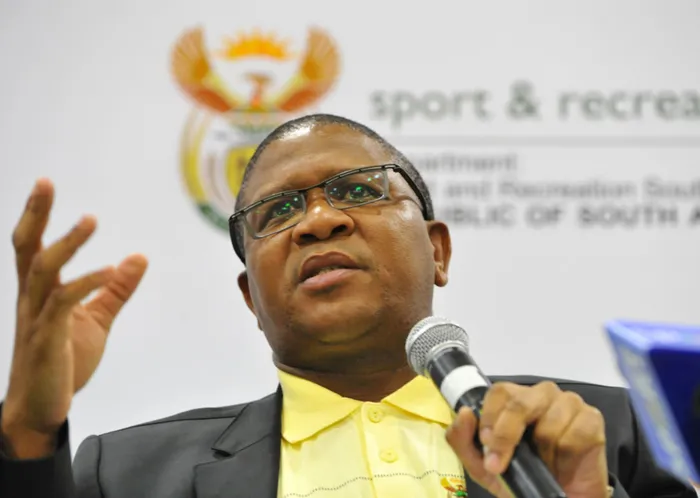
JOHANNESBURG, SOUTH AFRICA - APRIL 05, Minister of Sport and Recreation Fikile Mbalula during The National Sports Indaba held at Coca Coca Park on April 05, 2011 in Johannesburg, South Africa Photo by Duif du Toit / Gallo Images JOHANNESBURG, SOUTH AFRICA - APRIL 05, Minister of Sport and Recreation Fikile Mbalula during The National Sports Indaba held at Coca Coca Park on April 05, 2011 in Johannesburg, South Africa Photo by Duif du Toit / Gallo Images
Sports Minister Fikile Mbalula aims to succeed where his predecessors have failed in achieving genuine transformation and redress in sport.
Next week’s national sport and recreation indaba would include reviewing the various “instruments, policies, strategies and tactics” relied on over the past 17 years to bring about change, Mbalula told the National Assembly on Tuesday. Since the 2008 national sport indaba “we are here again grappling with the same issues”, he said.
Then the debates were about “the slow pace and resistance to change in sporting circles”, with delegates citing “living examples in rugby and cricket that pointed to lingering prejudices”.
Broadening access, reviving school sport and promoting physical education were all on the agenda, Mbalula said.
The theme of next week’s indaba, taking place on Monday and Tuesday, is “From policy to practice – not just another indaba”.
Delegates would be called on “to honestly respond” to the 1985 multilateral international convention against apartheid in sport. This was adopted by the UN General Assembly in a bid to eliminate the discrimination used under apartheid to entrench the dominance of “one racial group of persons over another” in professional and amateur arenas.
Transforming sport and recreation meant redressing the imbalances of the past and deracialising “elite privileges”, Mbalula said.
“We must all be combat-ready to join all South Africans in the battle trenches for a non-racial, non-sexist, democratic, accessible, integrated and united sport and recreation system today and beyond,” he said.
Opposition parties broadly welcomed his intentions, calling for particular attention to be paid to rural and township schools, and the “corruption infecting some codes”.
“Naked greed, power, mania, ineptitude and corruption must be rooted out if we ever hope to reclaim our sporting glory,” said the PAC’s Letlapa Mphahlele.
The DA’s Donald Lee rejected quotas as a means of achieving redress, because this “reinforced the racial ideology of apartheid”.
Programmes designed to “counter disadvantage and overcome discrimination” would be preferable, he said.
He said the politicisation of sport and “sustained” political interference had damaged institutions and failed to produce a new generation of sports professionals able to compete on the world stage.
The ID’s Joe Mcgluwa said Mbalula’s predecessors had failed the department because, 17 years into democracy, the country still lacked a developmental sports plan.
Mcgluwa called for an audit of coaches and the role they had played in transformation so that those who were “resisting” could be replaced.
He said the current “score system on transformation” did not provide for “punitive measures” against those who failed to adhere to it.
Noting that the National Assembly’s sports oversight committee had only yesterday elected a new chairperson to replace Butana Komphela, now an MEC in the Free State, Mcgluwa reminded Mbalula that he was accountable to it.
“We cannot engage with you on serious matters, simply because you never attend,” Mcgluwa said. - Political Bureau