

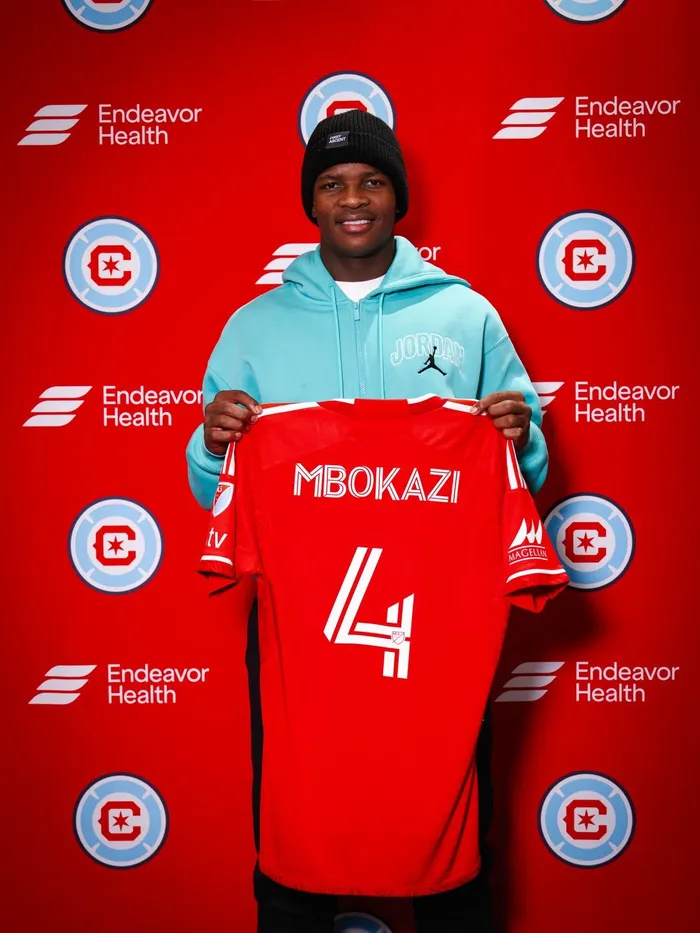
Mbekezeli Mbokazi has recently completed the move from Orlando Pirates to Major League Soccer side Chicago Fire.
Image: Chicago Fire on Facebook
America’s Department of Homeland Security has recently ramped up its Operation Metro Surge, a large-scale immigration enforcement operation deployed primarily in Minnesota and involving thousands of federal immigration agents.
The Trump administration has described the operation as targeting undocumented immigrants, but the campaign has also led to widespread criticism and legal challenges from state officials and civil rights advocates.
The operation has resulted in more than 3,000 arrests and at least two fatal shootings by federal agents in Minneapolis – including the deaths of Renée Good and Alex Pretti – both US citizens. These incidents have sparked protests, lawsuits, and growing concern among residents, who say enforcement tactics raise questions about racial profiling and the detention of people with lawful status.
Advocates and local officials have highlighted cases in which people with no criminal history or lawful status were detained or caught up in enforcement actions, fuelling fears that Latino, black and other immigrant communities are being disproportionately affected.
In light of these developments, IOL Sport submitted questions to Major League Soccer and several of its clubs about the safety and well-being of South African players and coaches currently in the United States. We asked whether there were any contingencies in place should any player be stopped or detained by United States Immigration and Customs Enforcement (ICE) agents.
We approached MLS itself, Minnesota United – who have Bongokuhle Hlongwane on their books – the Philadelphia Union, who employ Olwethu Makhanya and are coached by Bradley Carnell, as well as Chicago Fire, who recently signed Mbekezeli Mbokazi and Puso Dithejane. None replied to our requests.
Clubs’ silence over the issue is something that has been reported on in the United States. In June last year, Rolling Stone reported that fan groups from LA Galaxy and Chicago Fire were boycotting their teams for not issuing statements of support for Latino communities targeted by ICE.
Hlongwane, Makhanya, Mbokazi and Dithejane are all legally employed professionals, but advocates note that recent enforcement actions have shown that legal status does not always prevent detention.
As young black, non-US citizens with accents, the four footballers fit the profile of communities that advocates say have been disproportionately affected by recent ICE actions, raising the risk of questioning or detention despite their legal status.
For families and supporters watching from South Africa, the absence of clear communication from clubs and the league only adds to uncertainty about how their players would be treated if stopped by ICE agents.
At a time when immigration enforcement has escalated into a national flashpoint, the decision by MLS and its clubs to remain silent leaves foreign players exposed to uncertainty in an increasingly volatile environment. Until that silence is broken, the question of who ultimately bears responsibility for the safety of foreign players in MLS remains unanswered.
IOL Sport