

Sandile Mdadane is the Editor of the Sunday Tribune
Image: File
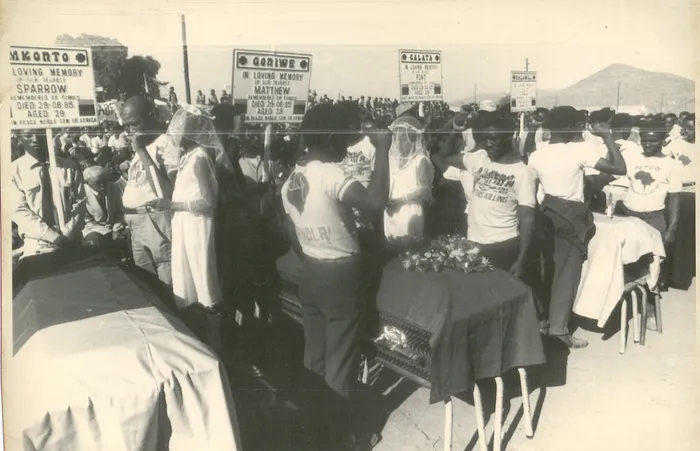
THE funeral of the anti-apartheid activists Mathew Goniwe, Fort Calata, Sparrow Mkhonto and Sicelo Mhlauli, collectively known as the Cradock Four in 1985. The four were abducted from a roadblock, assaulted and their bodies set alight. More than 16,000 people in 160 buses, and thousands more in private cars and bakkies, descended on Cradock (now Nxuba) in the Eastern Cape for the funeral of the community leaders on July 20, 1985. Their story is one of many of apartheid-era's unsolved crimes.
Image: Independent Media Archives
Sandile Mdadane is the Editor of the Sunday Tribune
Image: File
The Truth and Reconciliation Commission (TRC) referred over 300 apartheid-era crimes for further investigation and prosecution to the National Prosecuting Authority (NPA) in its final report, where amnesty was denied against the perpetrators.
There are allegations of political interference by ministers and senior officials under former president Thabo Mbeki's administration in stymying efforts by the NPA to act.
Twenty-five families of the victims of apartheid-era crimes are seeking R167 million in constitutional damages against the government.
Mbeki and former Justice Minister Brigitte Mabandla approached the court to intervene, a move that was rejected by the court.
President Cyril Ramaphosa wants to delay the matter so that the government can reinstate its opposition in the case. The court has reserved its judgment.
Both Mbeki and Mabandla approached the court because they believed their intervention was necessary to protect their reputations. The families and the Foundation of Human Rights argued their suit was against state functionaries and not individuals.
There are many ways to read this situation. It may speak to the unresolved tensions within the ANC and the state's accountability post-1994.
President Ramaphosa's reluctance highlights the political risk of exposing inconvenient truths that might not only stain the apartheid regime but also reveal post-apartheid complicity in denying justice to victims.
Many apartheid-era crimes involved collusion between political operatives, the police and the military. The reluctance to prosecute could be to protect operatives who played both sides during the Struggle, who might still be active in the political arena.
Victims of these crimes continue to feel the betrayal as justice remains elusive. The government's inaction undermines the TRC, placing South Africa's human rights commitment in doubt.
The case has the potential to also be a huge embarrassment on the world stage for a country that approached the International Court of Justice (ICJ) over the war in Gaza but failed to act on human rights abuse cases at home.