

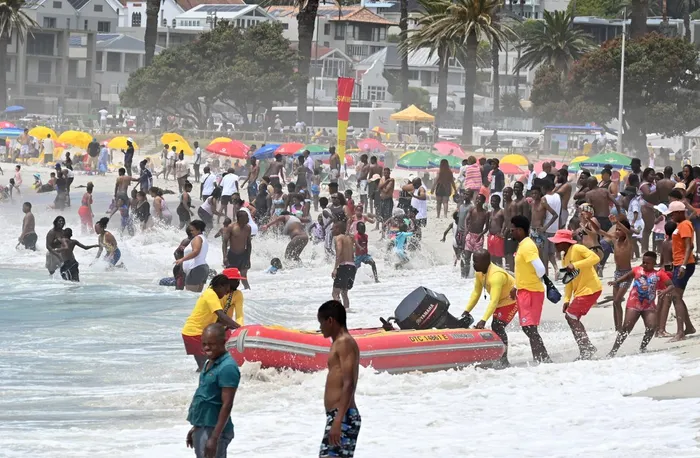
South African Weather Service (SAWS) warn of very hot and uncomfortable conditions across parts of the Western and Northern Cape.
Image: Ayanda Ndamane / Independent Media
AS A scorching heatwave grips the Western Cape, the National Sea Rescue Institute (NSRI) has issued an urgent appeal to the public: Exercise extreme caution around all bodies of water.
“The National Sea Rescue Institute (NSRI) is urging the public to exercise caution around water during the current heatwave affecting Cape Town and parts of the Western Cape,” the NSRI said in a statement.
The warning comes as the South African Weather Service (SAWS) forecasts temperatures in the mid-30s to low-40s°C from Monday, March 9, until Friday, March 13. With relief sought at beaches, rivers and dams, the NSRI stresses that enjoyment must not come at the cost of safety.
“Hot weather often draws large numbers of people to beaches, rivers and dams to cool off. While spending time in and around water can be enjoyable, it also increases the risk of drowning incidents if basic safety precautions are not followed,” the NSRI said.
The Institute’s primary advice is simple but critical: choose supervised beaches. “The NSRI encourages water users to choose beaches where lifeguards are on duty and to swim between their red and yellow flags. Lifeguards monitor water conditions and can quickly respond if someone needs help.”
For families, the message is unequivocal. “Parents and caregivers are reminded to watch children closely at all times around water. Drowning can happen quickly and silently. Young children should never be left unattended near water.”
Extreme heat demands proactive self-care. “During extreme heat, it is also important to stay well hydrated. Drink plenty of water throughout the day and avoid waiting until you feel thirsty. Dehydration can lead to fatigue, dizziness and poor judgement, which can increase the risk of accidents in and around the water.”
Equally vital is avoiding alcohol before water activities. “Alcohol and water activities are a dangerous combination. The NSRI strongly advises against swimming, boating or participating in water activities after consuming alcohol, as alcohol impairs judgement, balance and reaction time.
Beachgoers must respect the power of the ocean, particularly rip currents. “Beachgoers should also remain aware of rip currents, which are strong channels of water flowing away from the shore.
“If caught in a rip current, do not panic and do not try to swim directly back to shore. Instead, remain calm, float if necessary and swim parallel to the shoreline until you are out of the current, then make your way back to the beach. Raise your arm and call for help if needed,” the NSRI said.
The NSRI also issued a grim warning to would-be rescuers. “Never go into the water to try and help a person in difficulty without first calling for help and taking something that floats with you. That could be a Pink Rescue Buoy or a surf board.”
Inland waterways present their own hazards. “Those visiting rivers and dams are reminded to be cautious of slippery banks and sudden drop-offs, according to the NSRI. And on any vessel, safety gear is non-negotiable. “Always supervise children closely and ensure that everyone on boats or paddle craft wears a lifejacket.”
Summarising its position, NSRI communications manager Andrew Ingram emphasised that prevention is straightforward. “During hot weather, we often see increased activity at beaches, rivers and dams. A few simple precautions can make the difference between having fun and a tragedy.”
Ingram reiterated that immediate action was what would save lives. “The NSRI also reminds the public that rescue services should be contacted immediately if someone appears to be in difficulty in the water.”
Community vigilance remains a cornerstone of water safety. “Water users are encouraged to buddy up, look out for one another, respect local safety signage and follow the guidance of lifeguards.”
As the mercury rises, the final word from the rescue institute is one of cautious optimism.