The dirty side of political economy
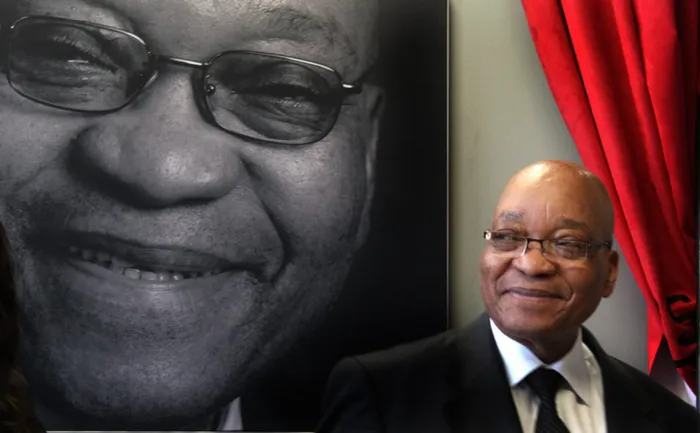
IN CHARGE: Was President Jacob Zuma's decision to take direct control in three provinces taken out of real concern or was it a Machiavellian political move? Picture: Thobile Mathonsi IN CHARGE: Was President Jacob Zuma's decision to take direct control in three provinces taken out of real concern or was it a Machiavellian political move? Picture: Thobile Mathonsi
A BUSINESSMAN once negotiated a contract with a provincial government. It was successful. But he was called in by a senior government official just before the deal was sealed.
The senior provincial government official told him that the businessman appeared in a local paper with another businessman who happened to be the premier’s friend-cum-adversary. The picture was taken at a party of another friend-cum-enemy of the premier. The deal was off. Just like that. The dilemma for the businessman was to deny his connection to the premier’s foes, or lose the contract. He claimed he chose the latter.
He believes that his company is the only one qualified to do the job, meaning the job will not be done to the benefit of the people of the province. I’m not sure. It doesn’t matter. What matters, which is disturbing, is what in ANC lingo is called “patronage”. It’s the dirty side of the political economy. It’s a simple matter of someone’s mafia games with our taxes.
If the businessman’s story is true, then the premier and the senior government official are nothing but thugs. The businessman claims he hasn’t pursued the matter. I give him the benefit of the doubt.
However, there are cases where businesses collude and perpetuate this corruption.
They point fingers at politicians when they lose out on contracts. But when it suits them, they know how to play the silly game of positioning themselves with the right crowd, or the right faction. They pump money to sustain gluttons in power for their own selfish interests. And the gluttons love it.
But these corrupt business people readily and swiftly turn their coats to reflect the coat of arms of the winning faction should their traditional source of corrupt contracts lose at ANC conferences.
On the other hand, politicians want the money to win these conferences. So, the vicious circle will not stop. Sadly, honest entrepreneurs are elbowed aside. And the quality of government services is compromised. Unfortunately, public servants also play the game very well.
Apparently, some public servants check company directors before awarding a tender, to make sure they are not rewarding the wrong crowd. It’s sheer corruption (if it’s true).
The officials either believe this is what is required of a true deployed cadre or they are protecting their jobs. They are a pawn of a politicised public service.
Even some hard-working career public servants are treated with suspicion for questioning the dodgy deals.
What do you do if your conscience cost you your job? Most have resorted to trudging on silently while things are falling apart. The results are a stagnation of policymaking and governmental paralysis.
This depressing state of affairs has – for years – led to good policies being shelved or discarded because the minister, director-general or the MEC happened to belong to a wrong faction.
When power changes hands at ANC conferences, the winning crowd overhauls government in an unmanaged, shaky political transition. Once this is done, the new executive overhauls the public service for the right or wrong reasons.
If a new minister finds that the incumbent director-general is incompetent and doesn’t share his vision, the director-general must go.
But at times director-generals are fired for belonging to a wrong faction. A crony gets appointed.
Lamentably, such appointments have led to the collapse of services.
This is why the cabinet’s decision to take control and assist some departments in three provinces (not forgetting the earlier decision in the Eastern Cape) has sparked mixed reaction – mostly from rival factions.
Some viewed it as a political ploy by President Jacob Zuma to deal with his rivals in Limpopo, where the national government has decided to administer five departments, including the provincial treasury.
Others perceive the cabinet’s decision as a swift and firm reaction to prevent a total collapse of services, the repercussions of which will be felt by poor people, who are ANC voters.
There are some reasonable traces of truth in both arguments.
It was Zuma and the Polokwane voters who pushed for the appointment of the premiers of Limpopo, Gauteng, Free State and Eastern Cape.
Some of these premiers may well be competent, but the consideration at the time was their allegiance to the great chief who had just occupied Luthuli House.
The mission was to set up a new political establishment, different from the predecessor’s outfit (even though it was the same ANC which remained in power).
Fighting poverty, creating jobs, fixing the public service, and repairing an ailing infrastructure were an after-thought.
Replacing the predecessor’s people with new public servants was the priority, because they needed someone who understood the new vision – fair enough.
But there is no continuity. Outstanding policies and decisions are parked aside. And some of the new people might not necessarily be capable.
In the meantime, the looters take advantage of the transition and ransack government by dishing out contracts to tenderpreneurs connected to the new faction.
After the transitional dust has settled, the fallouts begin and the realignment of friends means tenders are rediverted to the buddies of the stronger factions.
The new tenderpreneurs have to pay their protection fee and there is not enough cash to build a road, a school, to feed children or to pay disability or old-age grants.
The outspoken in the community rise (at times stoked up by the weaker or losing faction), voters’ confidence slumps, and your popularity rating (as president) takes a knock.
What do you do if you are the president and are facing a near collapse of a provincial government that is led by a premier who was once your supporter and had turned against you? It is a fantastic dilemma.
This is what Zuma and his cabinet were faced with when they took the decision, especially on how to intervene in Limpopo – the centre of tendercracy and one of the toughest battlefields for Mangaung.
It is the home of Julius Malema, who is (and his allies) at war with Zuma.
But the reality facing an ordinary Limpopo resident is that the provincial government might not be able to pay salaries of public servants because the province “experienced a cash crisis two weeks ago”.
If the public servants don’t get paid, they could down tools or decide not to turn up for work in hospitals, schools, police stations and other government services.
It will be an unprecedented mess. As a Limpopo resident, this will affect you directly.
“Limpopo had requested that their facility should be increased by R1 billion (to R1. billion) from the National Treasury for the province to pay salaries and wages on November 231.
“This request was declined, but alternative arrangements were made for an early transfer (two days before the actual date of transfer) of their equitable share in order to be able to pay salaries,” the cabinet said.
This should terrify any rational South African.
If you are the president of the country, it is imperative that you intervene to restore taxpayers’ confidence.
However, if you are the president of the ANC and are conscious of the internal dynamics of the succession battle, this is an opportune moment to pounce and snatch the province from your rivals.
More so if you believe that government money was redirected to fund corrupt tenders to fight against your re-election in Mangaung.
Does this amount to abusing state resources to fight your rivals?
The answer will be determined by the outcome of Zuma’s intervention.
The results will determine whether he was abusing his office by playing internal succession politics or if he was genuinely concerned about the sad state of affairs in these provinces, especially Limpopo.
Ironically, the infighting in the ANC has its positive effects, too.
Factions expose each other’s corrupt actions for their own political survival. In the long run, this is how we know some of the rot in government. This is how corrupt businessmen are exposed.
However, the negative effects are that government is in perpetual Polokwane, perpetual Mangaung, or what some Americans call a permanent campaign.
This means that the cabinet decision on Limpopo in particular is likely to be overturned if Zuma loses his presidency in Mangaung next year.
That is if Malema’s faction manages to get Premier Cassel Mathale re-elected for a second term at the Limpopo ANC conference next weekend.
However, the decisions of the Mangaung victors are likely to be reversed by the winners of the 2018 ANC conference while our poorly resourced schools, spooky hospitals and collapsing infrastructure get worse.
And tenderpreneurs are laughing all the way to the bank.