

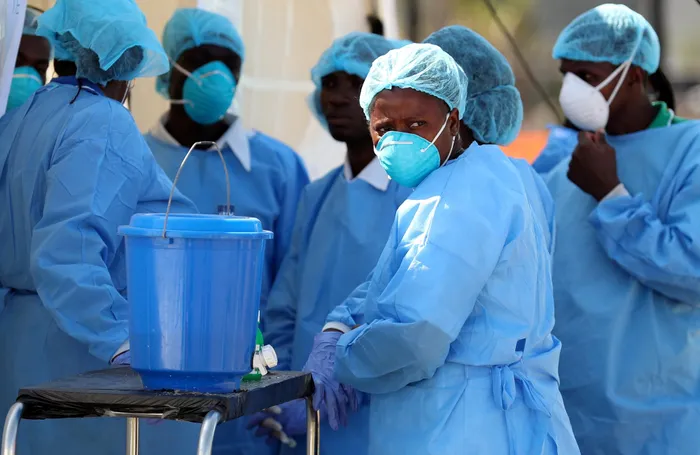
File Picture: According to the National Institute for Communicable Diseases (NICD), the Gauteng province has six confirmed cholera cases, including one death. REUTERS/Mike Hutchings
Johannesburg - According to the National Institute for Communicable Diseases (NICD), the Gauteng province has six confirmed cholera cases, including one death.
All of the cases are adults, with ages ranging from 19 to 44 years. No confirmed cases have been reported in other provinces.
According to the NICD, the first three cases were imported or import-related cases following travel to Malawi. Cases four and five contracted the infection locally; they had not travelled, had no connections to imported cases or each other, and did not live or work in the same area.
"By definition, the detection of locally acquired indigenous cholera cases is a confirmed cholera outbreak. The source(s) of infection in these cases is not known at present," read an NICD statement.
The institute further said that while there is an ongoing risk for imported cases following travel from other African countries currently experiencing cholera outbreaks (especially Malawi, Mozambique, Zambia, and Zimbabwe), the detection of locally acquired cases is critical to guide public health investigations and timely interventions that effectively interrupt cholera transmission in affected communities.
"Healthcare workers and laboratorians countrywide have been urged to consider and test for cholera in persons with acute watery diarrhoea," added the NCID.
The City of Johannesburg has indicated that as of January 31, 2023, three countries in the southern African region (Malawi, Mozambique, and Zambia) reported ongoing cholera outbreaks.
"The City of Johannesburg can confirm that since the recent reports of the cholera outbreak in our neighbouring countries, five cases have been confirmed in South Africa, of which four cases were reported in the City of Johannesburg."
"The cases are of two sisters who had recently travelled to Malawi for a funeral and developed symptoms on their return to Johannesburg. The third case is a contact to the sisters, and the fourth case is a man from Alexandra Township," said a city statement.
MMC Health and Social Development Ennie Makhafola urged members of the public and healthcare professionals to exercise caution and report any suspicions of cholera for further investigation.
Makhafola encouraged individuals to practice good hand hygiene, which includes washing their hands with water and soap, both before and after using the restroom or the toilet and before preparing or eating food.
Some facts about cholera provided by the City of Johannesburg include:
What is cholera?
Cholera is a diarrheal disease caused by a bacterium called Vibrio cholerae. Most people infected with V. cholerae do not develop any symptoms, although the bacteria are present in their faeces for 1–10 days after infection and are shed back into the environment, potentially infecting other people.
To whom does cholera pose a threat?
It can affect all ages, mostly individuals who lack access to adequate sanitation and piped, safe water.
How is cholera spread?
When cholera is severe, it often manifests as follows:
What safety measures are recommended?
How does cholera get treated?
Cholera outbreaks usually occur in settings with inadequate sanitation and insufficient access to safe drinking water. Currently, cholera is not endemic in South Africa, and the last outbreak was in 2008/9.
The Star